This is a thoughtful and powerful article, part 3 in a series, but it can just as well stand alone in it's depth of analysis of the roots of mob mentality and the symbolic sacrifice of those deemed unclean/unworthy/uncaring, etc.
Mob Morality and the Unvaxxed
 |
| 💓930 |
(A standalone Part 3 of a series. Part 1, Part 2)
Propaganda must facilitate the displacement of aggression by specifying the targets for hatred.
– Joseph Goebbels
We
would like to think that modern societies like ours have outgrown
barbaric customs like human sacrifice. Sure, we still engage in
scapegoating and figuratively sacrifice people on the altar of public
opinion, but we don’t actually kill people in hopes of placating the
gods and restoring order. Or do we?
Some scholars believe we do.
Following the thought of the late philosopher Rene Girard, they argue
that human sacrifice is still with us today in the form of capital
punishment (and incarceration – a removal from society). Girard believed
that human sacrifice arose in response to what he called a “sacrificial
crisis.” The original sacrificial crisis – the greatest threat to early
societies – was escalating cycles of violence and retribution. The
solution was to redirect the vengeance away from each other and, in
violent unanimity, toward a scapegoat or class of scapegoats. Once
established, this pattern was memorialized in myth and ritual, applied
preemptively as human sacrifice, and carried out in response to any
other crisis that threatened society.
In this view, capital punishment originated in human sacrifice and it is
human sacrifice. It performs the same function: to forestall reciprocal
violence through unanimous violence. It does so by monopolizing
vengeance, truncating the cycle of retaliatory violence at the first
iteration. This works whether the subject of execution or incarceration is guilty of a crime or not. Justice is a cover story for something more primal. Theologian Brian K. Smith writes,
The subject of a modern execution might also be carrying multivalent significations. Among other things (i.e., racial and economic metonymic potentialities), such a figure might serve as the representative of all crime, of "disorder" and social "chaos," of the "breakdown of values," etc. Apart from any utilitarian deterrent effect capital punishment might have, it is one, rather drastic, response to a social problem – illegal and illicit violence.
In other words, what we
rationalize in the language of justice and deterrence is actually a
blood ritual, in which a person, whether guilty or not, becomes a
symbol. Ritual springs up irrepressibly around executions: the last
meal, the “dead man walking” to the special execution chamber, the
witnesses, the medical procedures, the presiding physician, the signed
papers, the last rites, the covering of the head, the precise timetable,
the final words, and the exacting attention to detail all mark off the
execution as separate, special… sacred.
Something Must be Done
In a lucidly argued paper,
legal scholar Roberta Harding offers several examples from the deep
South during Jim Crow where judge, jury, and prosecutor well knew that
the accused black man was innocent of the charge of raping a white
woman. However, because the white supremacist social order was
threatened by consensual interracial intercourse, they executed the
accused anyway; if they failed to do so promptly he was lynched. Partly
this was to set an example and terrify the black population, but partly
it was because something had to be done.
By the same
token, it mattered little that Afghan villagers or Iraqi politicians had
no culpability for 9/11; nor did it matter that bombing them would have
no practical effect on future terrorism (except to further inflame it).
Obviously, the United States was using 9/11 as a pretext to accomplish
larger geopolitical aims. Yet it worked as a pretext only because of
broad public agreement that “something must be done.” And, enacting the
age-old pattern, we knew what to do: find some target of unifying
violence that cannot effectively retaliate. I was dismayed in 2001 when,
at Quaker Meeting of all places, one of the Quakers said, “Of course, a
forceful response of some kind is necessary.” What, I wondered, does
“forceful” mean? It means bombing someone. In other words, we must find
someone upon whom to visit violence. He may also have mentioned
addressing the imperialist causes of terrorism, but those were not the
subject of “of course.” Nearly everyone instinctively took for granted
the necessity of finding sacrificial victims. We were definitely going
to bomb someone – the only question was whom.
The 9/11 attack
exemplifies what Harding calls a triggering incident, which
“resuscitates dissensions, rivalries, jealousies and quarrels within the
community,” leading to a sacrificial crisis. A recent such incident was
the murder of George Floyd. The latent conflicts it exposed have been
festering for so long that it takes little provocation for them to erupt
into an active crisis. The response to Floyd’s murder is a classic
illustration of the calming power of violent unanimity, as Derrick
Chauvin’s conviction and sentencing temporarily quelled the racialized
civil unrest that the killing sparked. Something was done – but only to
quell the unrest, not to solve the complex, heavily ramified problem of
police killings. It no more addressed the source of America’s race
problems than killing Osama Bin Laden made America safe from terrorism.
Not
just any victim will do as an object of human sacrifice. Victims must
be, as Harding puts it, “in, but not of, the society.” That is why,
during the Black Death, mobs roamed about murdering Jews for “poisoning
the wells.” The entire Jewish population of Basel was burned alive, a
scene repeated throughout Western Europe. Yet this was not mainly the
result of preexisting virulent hatred of Jews waiting for an excuse to
erupt; it was that victims were needed to release social tension, and
hatred, an instrument of that release, coalesced opportunistically on
the Jews. They qualified as victims because of their in-but-not-of
status.
“Combatting hatred” is combatting a symptom.
Scapegoats
needn’t be guilty, but they must be marginal, outcasts, heretics,
taboo-breakers, or infidels of one kind or another. If they are too
alien, they will be unsuitable as transfer objects of in-group
aggression. Neither can they be full members of society, lest cycles of
vengeance ensue. If they are not already marginal, they must be made so.
It was ritually important that Derrick Chauvin be cast as a racist and
white supremacist; then his removal from society could serve
symbolically as the removal of racism itself.
Just to be clear
here, I am not saying Derrick Chauvin’s conviction for George Floyd’s
murder was unjust. I am saying that justice was not the only thing
carried out.
Representatives of Pollution
Aside
from criminals, who today serves as the representative of Smith’s
“disorder,” “social chaos,” and “breakdown of values” that seem to be
overtaking the world? For most of my life external enemies and a
story-of-the-nation served to unify society: communism and the Soviet
Union, Islamic terrorism, the mission to the moon, and the mythology of
progress. Today the Soviet Union is long dead, terrorism has ceased to
terrify, the moon is boring, and the mythology of progress is in
terminal decline. Civil strife burns ever hotter, without the broad
consensus necessary to transform it into unifying violence. For the
right, it is Antifa, Black Lives Matter protesters, critical race theory
academics, and undocumented immigrants that represent social chaos and
the breakdown of values. For the left it is the Proud Boys, right wing
militias, white supremacists, QAnon, the Capitol rioters, and the
burgeoning new category of “domestic extremists.” And finally, defying
left-right categorization is a promising new scapegoat class, the
heretics of our time: the anti-vaxxers. As a readily identifiable
subpopulation, they are ideal candidates for scapegoating.
It
matters little whether any of these pose a real threat to society. As
with the subjects of criminal justice, their guilt is irrelevant to the
project of restoring order through blood sacrifice (or expulsion from
the community by incarceration or, in more tepid but possibly
prefigurative form, through “canceling”). All that is necessary is that
the dehumanized class arouse the blind indignation and rage necessary to
incite a paroxysm of unifying violence. More relevant to current times,
this primal mob energy can be harnessed toward fascistic political
ends. Totalitarians right and left invoke it directly when they speak of
purges, ethnic cleansing, racial purity, and traitors in our midst.
Sacrificial
subjects carry an association of pollution or contagion; their removal
thus cleanses society. I know people in the alternative health field who
are considered so unclean that if I so much as mention their names in a
Tweet or Facebook post, the post may be deleted. Deletion is a
certainty if I link to an article or interview with them. The public’s
ready acceptance of such blatant censorship cannot be explained solely
in terms of its believing the pretext of “controlling misinformation.”
Unconsciously, the public recognizes and conforms to the age-old program
of investing a pariah subclass with the symbology of pollution.
This
program is well underway toward the Covid-unvaxxed, who are being
portrayed as walking cesspools of germs who might contaminate the
Sanctified Brethren (the vaccinated). My wife perused an acupuncture
Facebook page today (which one would expect to be skeptical of
mainstream medicine) where someone asked, “What is the word that comes
to mind to describe unvaccinated people?” The responses were things like
“filth,” “assholes,” and “death-eaters.” This is precisely the
dehumanization necessary to prepare a class of people for cleansing.
The
science behind this portrayal is dubious. Contrary to the association
of the unvaccinated with public danger, some experts contend that it is
the vaccinated that are more likely
to drive mutant variants through selection pressure. Just as
antibiotics result in higher mutation rates and adaptive evolution in
bacteria, leading to antibiotic resistance, so may vaccines push viruses
to mutate. (Hence the prospect of endless “boosters” against endless
new variants.) This phenomenon has been studied for decades, as this article
in my favorite math & science website, Quanta, describes. The
mutated variants evade the vaccine-induced antibodies, in contrast to
the robust immunity that, according to some scientists, those who have
already been sick with Covid have to all variants (See this and this, more analysis here, compare to Dr. Fauci’s viewpoint.)
It
is not my purpose here, however, to present a scientific case. My point
is that those in the scientific and medical community who dissent from
the demonization of the unvaxxed contend not only with opposing
scientific views, but with ancient, powerful psycho-social forces. They
can debate the science all they want, but they are up against something
much bigger. Rwandan scientists could just as well have debated the
precepts of Hutu Power for all the good that would have done. Perhaps
the Nazi example is more apposite here, since the Nazis did invoke
science in their extermination campaigns. Then as now, science was a
cloak for something more primal. The hurricane of sacrificial violence
easily swept aside the minority of German scientists who contested the
science of eugenics, and it wasn’t because the dissidents were wrong.
We
face a similar situation today. If the mainstream view on Covid
vaccines is wrong, it will not be overthrown by science alone. The
pro-vaccine camp has a powerful nonscientific ally in the collective id,
expressed through various mechanisms of ostracism, shaming, and other
social and economic pressure. It takes courage to defy a mob. Doctors
and scientists who express anti-vaccine views risk losing funding, jobs,
and licenses, just as ordinary citizens face censorship on social
media. Even a non-polemic essay like this one will likely be censored,
especially if I stain it with the pollution of the heretics by linking
blacklisted websites or articles by the disinformation dozen anti-vaxxers. Here, let’s try it for fun. Greenmedinfo! Chldren’s Health Defense! Mercola.com!
Ah. That felt a little like shouting swear words in public. You’d
better not follow these links, lest you be tainted by their pollution
(and your browsing history mark you as an infidel).
To
prepare someone for removal as the repository of all that is evil, it
helps to heap upon them every imaginable calumny. Thus we hear in
mainstream publications that anti-vaxxers not only are killing people,
but are raging narcissists, white supremacists, vile, spreaders of Russian disinformation, and tantamount to domestic terrorists.
These accusations are amplified by cherry-picking a few examples,
choosing hysterical-looking photos of anti-vaxxers, and showcasing their
most dubious arguments. If the authorities follow the playbook
developed to counter other domestic “threats,” we can also expect
agents-provocateurs, entrapment schemes, government agents voicing
violent positions to discredit the movement, and so forth – techniques
developed in the infiltration of the civil rights, environmental, and
anti-globalism movements.
Concerned friends have advised me to
“distance myself” from members of the Disinformation Dozen whom I know,
as if they carry some kind of contagion. Well, in a sense they do – the
contagion of disrepute. It reminds me of Soviet times when mere
association with a dissident could land one in the Gulag with them. It
also reminds me of my school days, when it was social suicide to be
friendly with the weird kid, whose weirdness would rub off on oneself.
In grade school, this contagion was known as “cooties.” (In my early
teens I was the weird kid, and only very brave teenagers would
be friendly to me while anyone was watching.) Clearly, the basic social
dynamic pervades society at many levels. A deeply ingrained gut instinct
recognizes the danger of membership in a pariah subclass. To defend the
pariahs or to fail to show sufficient enthusiasm in attacking them
marks one with suspicion; the result is self-censorship and discretion,
contributing all the more to the illusion of unanimity.
Hijacking Morality
The
same kind of positive reinforcement cycle is what generates a mob. All
it takes is a few loud people to incite it by declaring someone or
something a target. A portion of the crowd goes along enthusiastically.
The rest keep silent and conform in outward behavior even as they are
troubled within; to each, it looks like he or she is the only one who
disagrees. Writ large to the totalitarian state, the support of a
majority of the population is unnecessary. The appearance of support
will suffice.
The mechanisms that generate the illusion of
unanimity operate within science, medicine, and journalism as well as
among the general public. Some conform enthusiastically to the
orthodoxy; others complain in whispers to sympathetic colleagues. Those
who voice dissent publicly become radioactive. The consequences of their
apostasy (excommunication from funding, ridicule in the media, shunning
by colleagues who must “distance themselves,” etc.) serve to silence
other potential dissidents, who prudently keep their views to
themselves.
Notice that here I have not yet said what I
personally think about vaccine safety, efficacy, or necessity (be
patient); nonetheless, what I have said is enough for anyone to distance
themselves from me to keep safe. If I’m not an anti-vaxxer myself, I
certainly have their cooties.
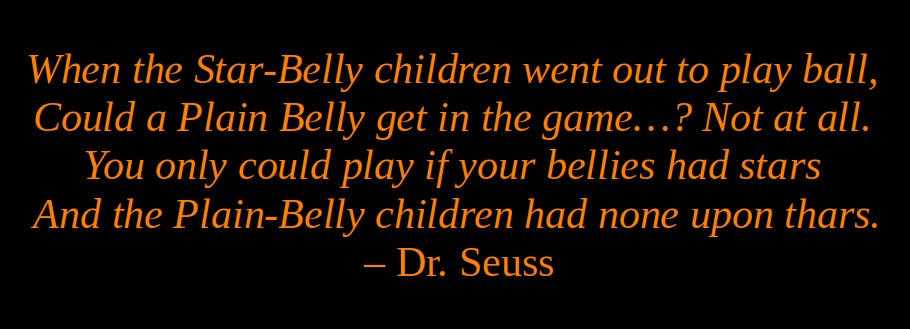
Someone on an online forum that I
co-host related an incident. His children had a play date scheduled at
their friend’s house. A parent called him to ask if his family had been
vaccinated. Politely, he said no, and his children were immediately
disinvited.
While
this parent doubtless believed he was being scientific in canceling the
invitation, I doubt science was really the reason. Even the most
Covid-orthodox person understands that the non-symptomatic children of
non-symptomatic parents pose negligible risk of infection; furthermore,
since vaccine believers presumably trust that the vaccine provides
protection, rationally speaking they have little to fear from the
unvaccinated. The risk is vanishingly small, but the moral indignation
is huge.
Many if not most people get the vaccine in an
altruistic civic spirit, not because they personally fear getting Covid,
but because they believe they are contributing to herd immunity and
protecting others. By extension, those who refuse the vaccine are
shirking their civic duty; hence the epithets “filth” and “assholes.”
They become the identifiable representatives of social decay, ready for
surgical removal from the body politic like cancer cells all
conveniently located in the same tumor.
Social stability depends
on people rewarding altruism and deterring antisocial behavior. These
rewards and deterrents are encoded into morals and then into norms and
taboos. Performing the rituals and avoiding the taboos of the tribe, and
shaming and punishing those who do not, one rests serenely in the
knowledge of being a good person. As an added benefit, one distinguishes
oneself as part of the moral majority, a full member of society, and
not part of the sacrificial minority. Our fear of nonconformity is born
of ancient experience so deeply ingrained it has become an instinct. It
is hard to distinguish it from morality.
The fear operating in the
ostracism of the unvaxxed is mostly not fear of disease, though disease
may be its proxy. The main fear, old as humanity, is of a social
contagion. It is fear of association with the outcasts, coded as moral
indignation.
In any society some people are especially zealous
in enforcing group norms, values, rituals, and taboos. They may be
controlling types, or they may simply care about the common good. They
serve an important function when the norms and rituals are aligned with
social and ecological health. But when corrupt forces hijack the norms
through propaganda and the control of information, these good folks can
become instruments of totalitarian control.
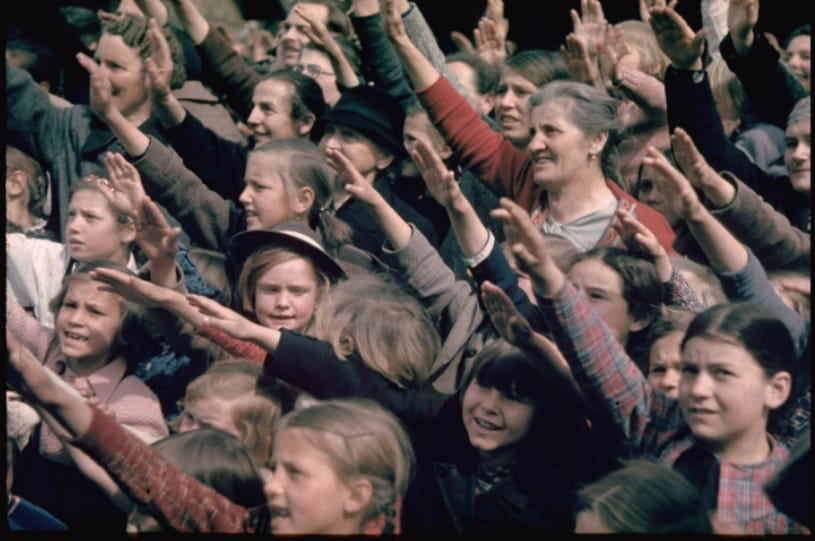
Those
doing the scapegoating may honestly, even fervently, believe the
narrative of “the unvaccinated endanger others.” Again, while I find the
evidence to the contrary persuasive, I won’t try to build a case for it
beyond the hints I’ve offered already. As the saying goes, you can’t
reason someone out of a position they didn’t reason themselves into to
begin with. Furthermore, most of the citations I would use would come
from blacklisted sources, which, owing to their heresy, are unacceptable
to those who trust official sources of information. If you trust the
official sources, why, then you trust their exclusion of the heretical
information. When official sources exclude all dissent, then all dissent
becomes a priori invalid to those who trust them.
Consequently,
much of the dissent migrates to dodgy right-wing websites without the
resources to check facts and scrutinize sources. One would think, for
example, that a highly credentialed scientist like Dr. Peter McCullough,
a professor of medicine, author of hundreds of peer-reviewed articles,
and president of the Cardio-Renal Society of America, would be able to
find a hearing outside the right-wing media ecosystem. But no. He’s been
sidelined to places like the right wing Catholic John-Henry Westen
show. I wish I could fine a link to this persuasive interview somewhere else, especially because there is actually nothing right-wing about McCullough’s views.
Tragically,
the sites that host people like McCullough are quite often home to
anti-immigrant and anti-LGBTQ articles that use the same tactics leveled
at anti-vaxxers, tap into the same template of dehumanization and
scapegoating, and lend themselves to the same fascistic ends.
Moving the Masses
For
these reasons, I won’t try too hard to substantiate my belief that –
and I may as well say it explicitly as a gesture of goodwill to the
censors, who will thus have an easier time deciding what to do with this
article – the Covid vaccines are much more dangerous, less effective,
and less necessary than we are told. They also seem not as dangerous, at
least in the short term, as some fear. People are not dropping dead in
the streets or turning into zombies; most of my vaccinated friends seem
to be just fine. So it is hard to know. The science on the issue is so
clouded by financial incentives and systemic bias that it is impossible
to rely on it to light a way through the murk. The system of research
and public health suppresses
generic medicines and nutritional therapies that have been demonstrated
to greatly reduce Covid symptoms and mortality, leaving vaccines as the
only choice. It also fails to adequately investigate numerous plausible
mechanisms for serious long-term harm. Of course, plausible does not
mean certain: at this point no one knows, or indeed can know, what the
long-term effects will be. My point, however, is not that the
anti-vaxxers are right and being unjustly persecuted. It is that their
persecution enacts a pattern that has little to do with whether they are
right or wrong, innocent or guilty. The unreliability of the science
underscores that point, and suggests that we take a hard look at the
deadly social impulses that the science cloaks.
To say that official sources exclude all
dissent overstates the case. In fact, peer-reviewed publications and
highly credentialed medical doctors and scientists concur with much of
what I’ve said. Admittedly, they are in the minority. But if they were
right, we would not easily know it. The mechanisms for controlling misinformation work equally well to control true information that contradicts official sources.
The
foregoing analysis is not meant to invalidate other explanations for
Covid conformity: the influence of Big Pharma on research, the media,
and government; reigning medical paradigms that see health as a matter
of winning a war on germs; a general social climate of fear, obsession
with safety, the phobia and denial of death; and, perhaps most
importantly, the long disempowerment of individuals to manage their own
health.
Nor is the foregoing analysis incompatible with the
theory that Covid and the vaccination agenda is a totalitarian
conspiracy to surveil, track, inject, and control every human being on
earth. There can be little doubt that some kind of totalitarian program
is well underway, but I have long believed it an emergent phenomenon
agglomerating synchronicities to fulfill the hidden myth and ideology of
Separation, and not a premeditated plot among human conspirators. Now I
believe both are true; the latter subsidiary to the former, its avatar,
its symptom, its expression. While not the deepest explanation for
humanity’s current travail, conspiracies and the secret machinations of
power do operate, and I’ve come to accept that some things about our
current historical moment are best explained in those terms.
Whether
the totalitarian program is premeditated or opportunistic, deliberate
or emergent, the question remains: How does a small elite move the great
mass of humanity? They do it by aggravating and exploiting deep
psycho-social patterns such as the Girardian. Fascists have always done
that. We normally attribute pogroms and genocide to racist ideology, the
classic example being antisemitic fascism. From the Girardian
perspective it is more the other way around. The ideology is secondary: a
creation and a tool of impending violent unanimity. It creates its
necessary conditions. The same might be said of slavery. It was not that
Europeans thought Africans were inferior and so thus enslaved them. It
was that thinking them inferior was required in order to enslave them.
On
an individual level too, who among us has not operated from unconscious
shadow motivations, creating elaborate enabling justifications and post facto rationalizations of actions that harm others?
Why
is fascism so commonly associated with genocide, when as a political
philosophy it is about unity, nationalism, and the merger of corporate
and state power? It is because it needs a unifying force powerful enough
to sweep aside all resistance. The us of fascism requires a them.
The civic-minded moral majority participates willingly, assured that it
is for the greater good. Something must be done. The doubters go along
too, for their own safety. No wonder today’s authoritarian institutions
know, as if instinctively, to whip up hysteria toward the newly minted
class of deplorables, the anti-vaxxers and unvaccinated.
Fascism
taps into, exploits, and institutionalizes a deeper instinct. The
practice of creating dehumanized classes of people and then murdering
them is older than history. It emerges again and again under all
political systems. Our own is not exempt. The campaign against the
unvaccinated, garbed in the white lab coat of Science, munitioned with
biased data, and waving the pennant of altruism, channels a brutal,
ancient impulse.
Does that mean that the unvaccinated will be
rounded up in concentration camps and their leaders ritually murdered?
No, they will be segregated from society in other ways. More
importantly, the energies invoked by the scapegoating, dehumanizing,
pollution-associating campaign can be applied to gain public acceptance
of coercive policies, particularly policies that fit the narrative of
removing pollution. Currently, a vaccine passport is required to visit
certain countries. Imagine needing one to go shopping, drive a car, or
exit your home. It would be easily enforceable anywhere that has
implemented the “internet of things,” in which everything from
automobiles to door locks is under central control. The flimsiest
pretext will suffice once the ancient template of sacrificial victim,
the repository of pollution, has been established.
Rene Girard was, from what I’ve read of his work, something of a fundamentalist. I do not agree with him that all desire beyond mere appetite is mimetic or that all
ritual originates in sacrificial violence, powerful though these lenses
are. By the same token, I don’t want to reduce our current acceleration
toward techno-totalitarianism and a biosecurity state by just one
psycho-social explanation, however deep. Yet it is important to
recognize the Girardian pattern, so we know what we are dealing with, so
that we can creatively expand our resistance beyond futile debate over
the issues – and most importantly, so we can identify its operation
within ourselves. Any movement that leverages contempt in its rhetoric
fits the Girardian impulse. Elements of scapegoating such as
dehumanization, rumor-mongering, stereotyping, punishment-as-justice,
and mob mentality are alive within dissident communities as they are in
the mainstream. Any who ride those powers to victory will create a new
tyranny no better than the previous.
There is another way and a
better future. I will describe it in Part 4 of this essay although the
reader already knows what it is, by feel if not in words. This future
reaches into the present and the past to show itself any time that
vengeance gives way to forgiveness, enmity to reconciliation, blame to
compassion, judgment to understanding, punishment to justice, rivalry to
synergy, and suspicion to laughter. Transcendence is in the human
being.

