Showing posts with label Spaceweather. Show all posts

Sunday, September 9, 2018

Spaceweather: TWO SOLAR WIND STREAMS + EQUINOX CRACKS ARE OPENING IN EARTH'S MAGNETIC FIELD

SPACEWEATHER:


TWO SOLAR WIND STREAMS:
The Arctic is about to get a double dose of auroras. Two solar wind streams are approaching Earth, each flowing from a distinct hole in the sun's atmosphere. The first stream is due to arrrive on Sept. 7-8 with the second following on Sept. 11-12. Neither is expected to produce a strong geomagnetic storm. Nevertheless, Arctic lights are in the offing.


Free:
Aurora Alerts.

EQUINOX CRACKS ARE OPENING IN EARTH'S MAGNETIC FIELD: The northern autumnal equinox is only 2 weeks away. That means one thing: Cracks are opening in Earth's magnetic field. Researchers have long known that during weeks around equinoxes fissures form in Earth's magnetosphere. Solar wind can pour through the gaps to fuel bright displays of Northern Lights. It just happened in Yellowknife, Canada:


"On Sept. 5-6, we could see auroras in the sky all night long, with a bright outburst
of pink shortly after midnight," says photographer Yuichi Takasaka.


During the display, a weak stream of solar wind was blowing around Earth. At this time of year, that's all it takes. Even a gentle gust can breach our planet's magnetic defenses.


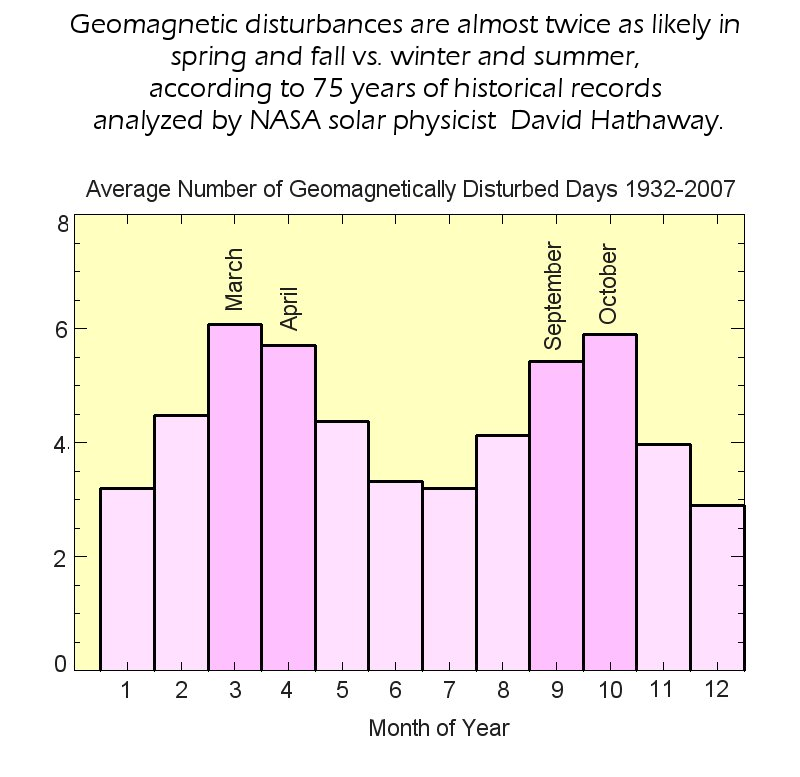
This is called the the "Russell-McPherron effect," named after the researchers who first explained it. The cracks are opened by the solar wind itself. South-pointing magnetic fields inside the solar wind oppose Earth's north-pointing magnetic field. North and South partially cancel one another, opening a crack. This cancellation can happen at any time of year, but it happens with greatest effect around the equinoxes. Indeed, a 75-year study shows that September is one of the most geomagnetically active months of the year–a direct result of "equinox cracks."


Stay tuned for more Arctic lights as autumn approaches.


Tuesday, September 12, 2017

Spaceweather: GEOMAGNETIC STORM PREDICTED from SOLAR RADIATION STORM AND GROUND LEVEL EVENT


Spaceweather

GEOMAGNETIC STORM PREDICTED:
NOAA forecasters say there is a 75% chance of moderately strong (G2-class) geomagnetic storms on Sept. 13th. That's when a CME hurled into space by yesterday's powerful X8-class solar flare will likely deliver a glancing blow to Earth's magnetic field. The impact of the CME could be enhanced by a fast-moving solar wind stream, expected to arrive at about the same time. If the G2-storm materializes, auroras in the USA could appear as low as New York to Wisconsin to Washington state. Free: Aurora Alerts

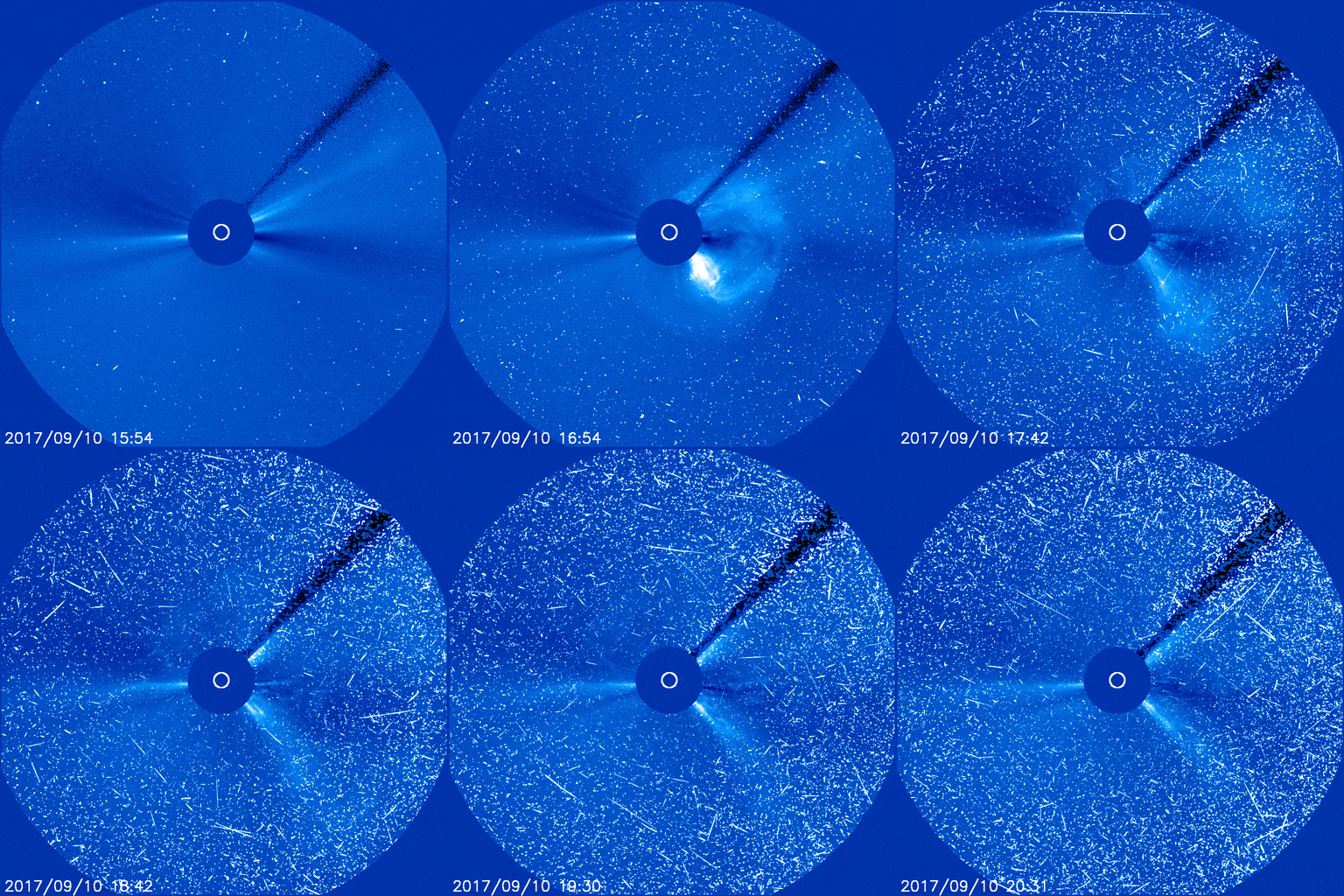
SOLAR RADIATION STORM AND GROUND LEVEL EVENT: On Sept. 10th, departing sunspot AR2673 erupted, producing a powerful X8-class solar flare. The explosion propelled a CME into space and accelerated a swarm of energetic protons toward Earth. Both are visible in this coronagraph movie from the Solar and Heliospheric Observatory (SOHO):


The many specks in this movie are not stars--they are solar protons striking SOHO's digital camera. Almost two days later these protons are still streaming past our planet, causing a moderately strong (S2-class) solar radiation storm. The latest data from SOHO show an ongoing blizzard of digital "snow" in coronagraph images:


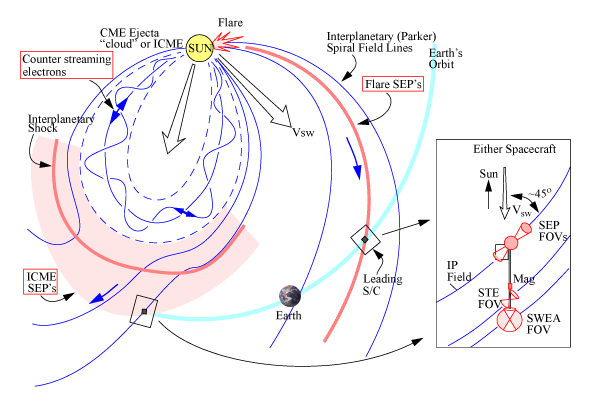
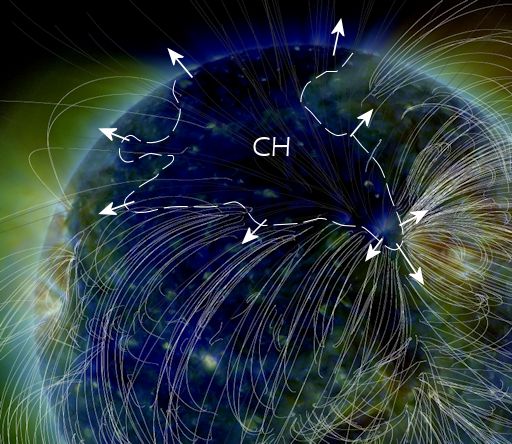
What made this flare so 'radioactive'? It has to do with the location of AR2673 at the time of the explosion. The sun's western limb is magnetically well-connected to Earth. Look at this diagram. Magnetic fields spiraling back from the blast site led directly to our planet, funneling these energetic protons Earthward.


Normally, solar radiation storms are held at bay by our planet's magnetic field and upper atmosphere. On Sept.10th, however, there was a "ground level event" (GLE). Neutron monitors in the Arctic, Antarctic, and several other high latitude locations detected a surge of particles reaching all the way down to Earth's surface:


:
The Bartol Research Institute's South Pole Neutron Monitor detected a GLE on Sept. 10th.


"In historical terms, this was a relatively small ground level event-- only about one thousandth as strong as the event of 23 Feb 1956, which is the largest measured," says Clive Dyer, a Visiting Professor at the University of Surrey Space Centre.


However, that does not mean the Sept.10th GLE was negligible. Dyer says that "passengers flying on high-latitude routes at 40,000 feet could have absorbed an extra 10 microSieverts of radiation. During the first hour of the GLE, the dose rate inside the aircraft during such a flight would have approximately doubled."


He also notes that the GLE could have caused minor upsets of onboard electronics and avionics, although nothing on the scale of the epic 1956 GLE, "which would be very challenging to modern systems."


"Since measurements began around 1942 there have now been 73 events detected by ground level radiation monitors," Dyer adds. "The Sept.10, 2017, event is far from the strongest, but it is of special interest because it demonstrates the need for continual vigilance even during Solar Minimum."


http://spaceweather.com/

Sunday, September 10, 2017

INCOMING: MAJOR SOLAR FLARE AND RADIATION STORM | Spaceweather.com

MAJOR SOLAR FLARE AND RADIATION STORM: Departing sunspot AR2673 erupted again on Sept.10th (1606 UT), producing a major X8-class solar flare.  Protons accelerated toward Earth by the explosion are swarming around our planet now, causing a moderately strong solar radiation storm. (continued below)


NASA Solar Dynamics Observatory recorded the flare's extreme UV flash

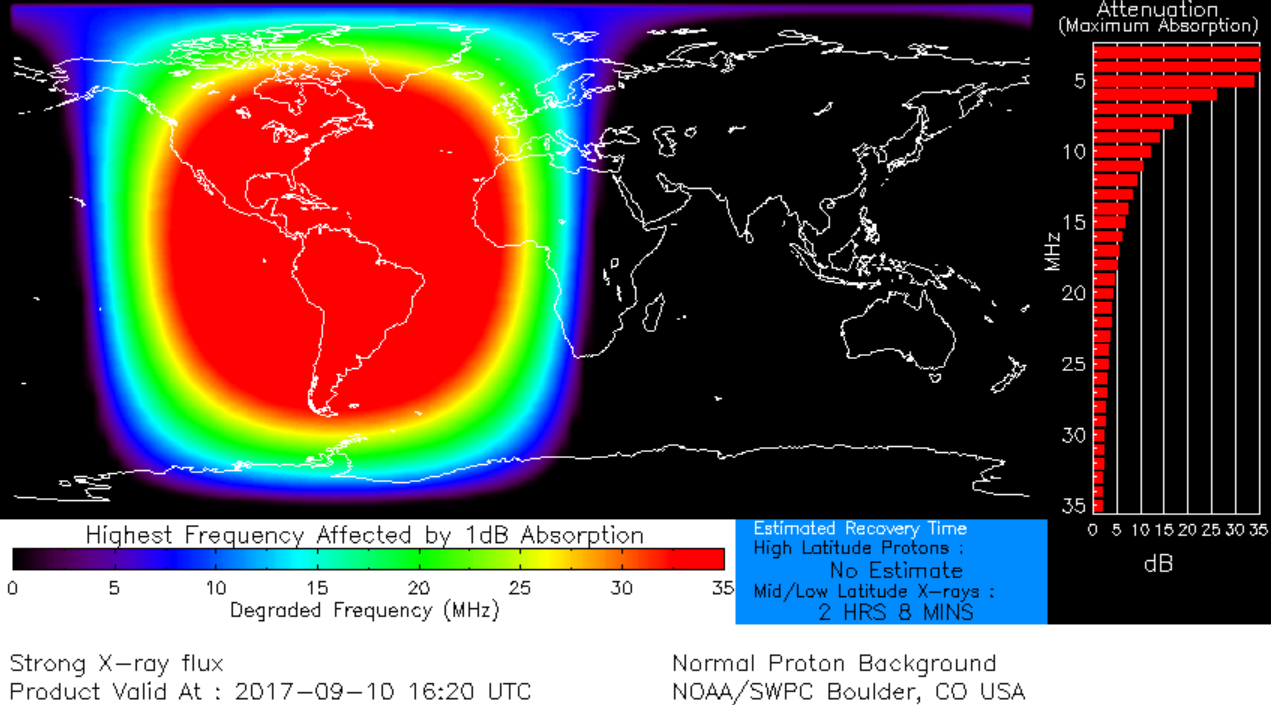
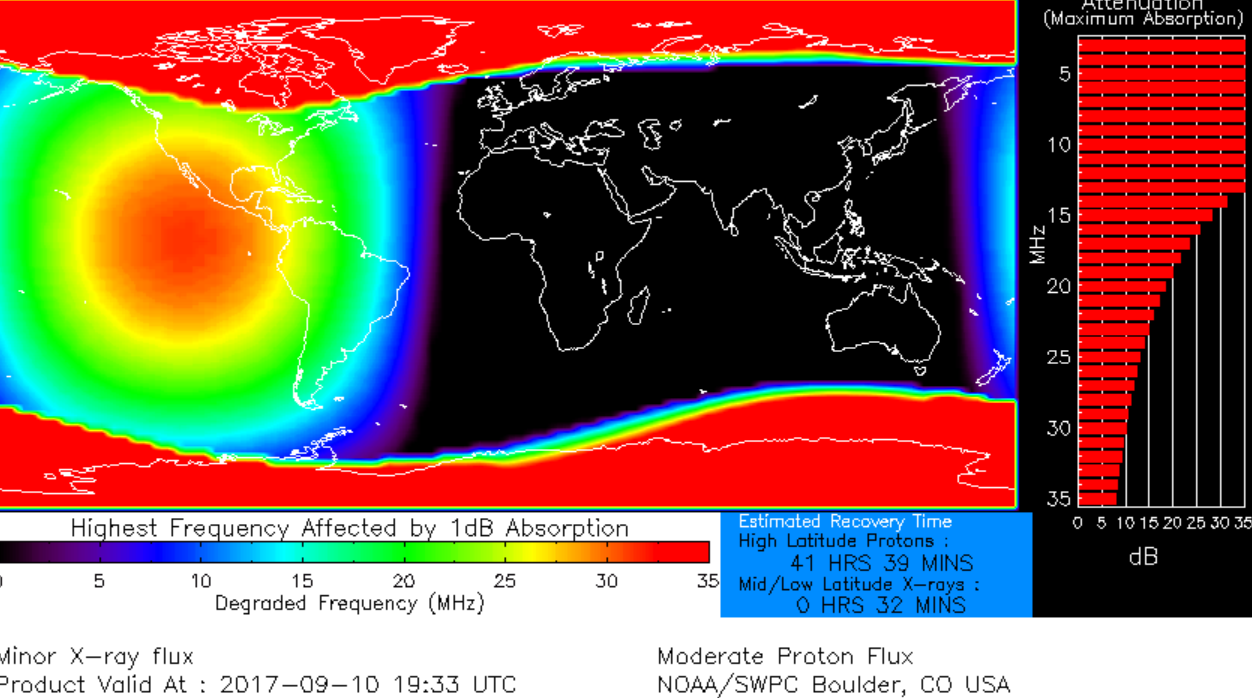
A pulse of ultraviolet and X-radiation from the flare ionized the top of Earth's atmosphere, triggering a shortwave radio blackout over the Americas (blackout map #1). That blackout is now subsiding. However, an even stronger blackout of shortwave radio communications around the poles is still underway (blackout map #2). Stay tuned for updates about this significant event.


http://spaceweather.com/

Saturday, September 9, 2017

Denise Le Fay: Fires, Floods, Hurricanes & X-Class Solar Flare

Fires, Floods, Hurricanes & X-Class Solar Flare


If you’ve felt EXTRA miserable physically, seriously achy, weak, rattled and sort of in a state of free-fall, and like every single cell in your entire body is swollen, hot and being irradiated the past three days or so, it’s only because that is exactly what’s been going on.

After clearing more whatever it was for you personally during epic August, here comes more NEW higher energies in early surreal September. The past two or three days have been extra painful physically for our bodies as they Embody more NEW higher Light, Codes, DNA and more every few days. A reader friend recently wrote me that she’s felt like “Every cell has been flogged!” which made me laugh because that was such an accurate description. Now we can add irradiated to the flogging thanks to the Sun spewing out a massive Solar flare. A 9.3 X-class Solar flare.

“This is a decade-class flare.” 


And that is exactly how it feels; epic and like nothing we’ve experienced before because we haven’t, not at this level. This seems to be in the air now and hurricane Irma is shaping up to be a record breaker also. There’s going to be more of this type of thing playing out now at this point within the Ascension and Embodiment Processes. No fear, just greater changes for everyone.

My body can’t sit at the computer for much longer than this today because of my irradiated, flogged, exploding with NEW Light cells that are hurting and expanding like crazy. Surrender to The Process and continue evolving into some more of what you/me/we are quickly becoming now. This is more prep work for our upcoming “coronations” later this month and the rest of the year and into 2018 as well. We’ve never been here before and that says a lot about how much AP and EP progress we’ve made so far so don’t worry about the NEWness of these greatly amplified, higher frequency, higher vibrational events both internal and external.

Denise
September 6, 2017


GEOMAGNETIC STORM WATCH (G3-CLASS): A CME hurled toward Earth by sunspot AR2673 on Sept.4th is due to arrive later today. NOAA forecasters say the CME’s impact could spark moderately-strong G2-class geomagnetic storms with isolated periods of strong G3-class storming on Sept. 6th and 7th. High-latitude sky watchers should be alert for auroras in bright moonlight. Free: Aurora Alerts

MAJOR X-CLASS SOLAR FLARE: On Sept. 6th at 1202 UT, sunspot AR2673 unleashed a major X9.3-class solar flare–the strongest solar flare in more than a decade. X-rays and UV radiation from the blast ionized the top of Earth’s atmosphere, causing a strong shortwave radio blackout over Europe, Africa and the Atlantic Ocean: blackout map.


Above: The extreme UV flash from today’s X9-class flare. Credit: Solar Dynamics Observatory

The explosion also produced a CME, shown here in a movie from NASA’s STEREO-A spacecraft. (The fast moving star-like object in the STEREO-A movie is the planet Mercury.) NOAA analysts are still modeling the trajectory of the CME to determine whether or not it is Earth-directed.

Many readers are asking about the historic context of this event. How epic is it? Answer: This is a decade-class flare. A list of the most powerful solar flares recorded since 1976 ranks today’s flare at #14, tied with a similar explosion in 1990. Compared to the iconic Carrington Event of 1859, or even the more recent Halloween storms of 2003, this event is relatively mild. Modern power grids, telecommunications, and other sun sensitive technologies should weather the storm with little difficulty.

On the other hand, sky watchers could see some fantastic auroras before the week is over. And ham radio operators will surely be noticing strange propagation effects as the sun exerts its influence on our planet’s ionosphere.Stay tuned for updates.

http://spaceweather.com/

Monday, July 24, 2017

MASSIVE EXPLOSION ON THE FARSIDE OF THE SUN | Spaceweather.com

Spaceweather.com


SLIGHT CHANCE OF STORMS:
For the 4th day in a row, Earth is inside a stream of solar wind flowing from a large hole in the sun's atmosphere. The steady pressure of this stream is doing little, however, to disturb our planet's magnetic field. NOAA forecasters say the chance of a geomagnetic storm on July 24th is only 15%. Free: Aurora Alerts


MASSIVE EXPLOSION ON THE FARSIDE OF THE SUN:
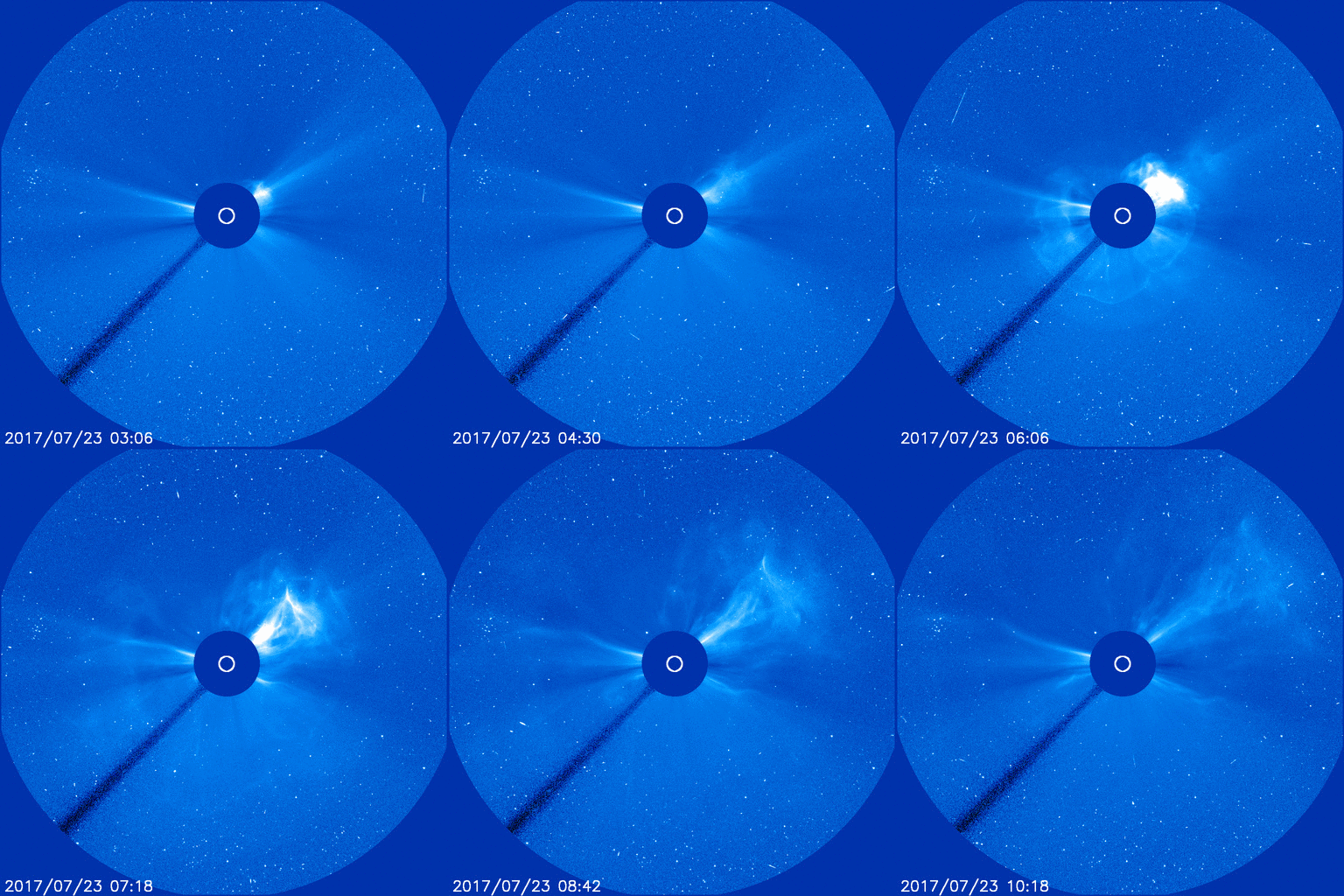
On Sunday July 23rd, a spectacular CME emerged from the farside of the sun. Coronagraphs onboard the orbiting Solar and Heliospheric Observatory (SOHO) tracked the fast-moving cloud as it billowed into space:


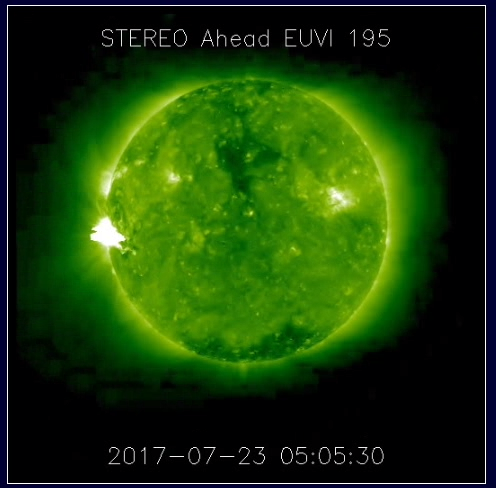
NASA's STEREO-A spacecraft, which has a partial view of the sun's farside, identified the source of the blast as active sunspot AR2665, familiar to readers of Spaceweather.com who watched the behemoth cross the Earthside of the sun earlier this month. STEREO-A observed an intense flash of extreme UV radiation from the sunspot's magnetic canopy:


The intensity of the flash suggests (but does not prove) that the underlying flare might have been the most intense kind: X-class.

If this explosion had occurred 2 weeks ago when the huge sunspot was facing Earth, we would be predicting strong geomagnetic storms in the days ahead. Instead, the CME is racing away from our planet ... and directly toward Mars. Compared to Earth, the Red Planet is currently on the opposite side of the sun, and apparently in the crosshairs of this CME. Mars rovers Curiosity and Opportunity might be observing the effects of a solar storm later this week.

Coincidentally, yesterday's farside explosion occurred on the 5th anniversary of another significant farside event: The Solar Superstorm of July 23, 2012.  That superstorm, which has been compared to the historic Carrington Event of 1859, could have caused widespread power blackouts if it had not missed our planet.

Sunspot AR2665 will be back on the Earthside of the sun a little more than a week from now. If the sunspot remains active, it could bring a new round of geomagnetic storms and auroras to our planet in early August. Stay tuned. Free: Solar Flare Alerts

Saturday, July 15, 2017

STRONG SOLAR FLARE AND CME | SPACEWEATHER


SPACEWEATHER
excerpt


What's up in space?


Lights Over lapland is excited to announce that Autumn Aurora Adventures are available for immediate booking! Reserve your adventure of a lifetime in Abisko National Park, Sweden today!

 
GEOMAGNETIC STORM WATCH: NOAA forecasters have analyzed this morning's solar flare and CME and they have issued a geomagnetic storm watch for July 16th and 17th. Storms could reach category G2 (moderately strong) on both days. High latitude sky watchers can expect midnight auroras on Sunday and Monday. Free: Aurora Alerts


STRONG SOLAR FLARE AND CME:
After days of suspenseful quiet, huge sunspot AR2665 finally erupted on July 14th (0209 UT), producing a powerful and long-lasting M2-class solar flare. Extreme ultraviolet telescopes onboard NASA's Solar Dynamics Observatory recorded the blast:


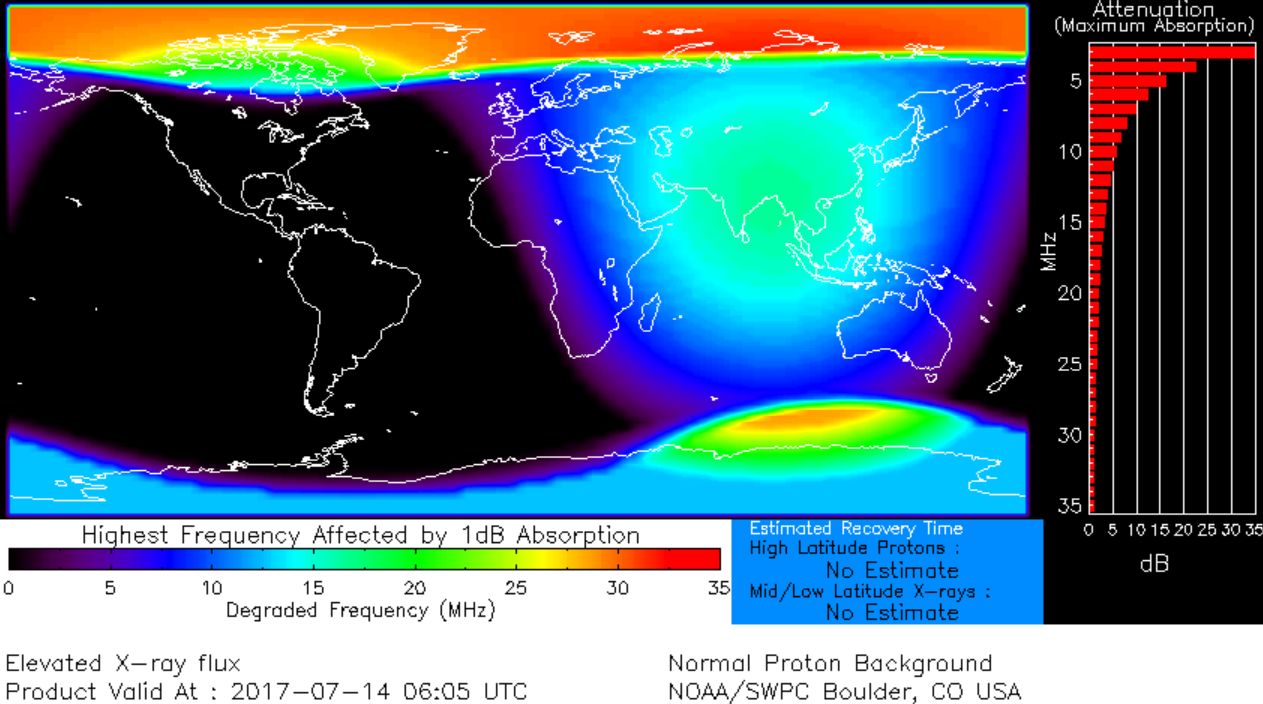
Remarkably, the explosion persisted for more than two hours, producing a sustained fusillade of X-rays and energetic protons that ionized the upper layers of Earth's atmosphere. Shortwave radio blackouts were subsequently observed over the Pacific Ocean and especially around the Arctic Circle. This map from NOAA shows the affected geographic regions.

Of even greater interest is the coronal mass ejection (CME). The explosion hurled a bright CME away from the blast site, and it appears to be heading for Earth:


This expanding cloud will likely reach our planet on July 16th, possibly sparking geomagnetic storms and high-latitude auroras when it arrives. Stay tuned for improved predictions as NOAA analysts model the trajectory and potency of the incoming CME. Free: Aurora Alerts


SOLAR ECLIPSE SPACE PENDANTS:
Would you like to support our Solar Eclipse Balloon Network? Here's one way: Buy a space pendant. This solar eclipse-themed necklace flew to the stratosphere on July 2, 2017, attached to the payload of an Earth to Sky Calculus space weather balloon:


The payload contained more just like it. If you buy one now for $79.95, we will fly it back to the stratosphere during the Great American Solar Eclipse on August 21, 2017, where it will be enveloped by the Moon's cool shadow above our launch site in Oregon. No additional charge! Just make a note in the COMMENTS BOX of the shopping cart: "Please fly my pendant into the eclipse!" Each pendant comes with a greeting card showing the jewelry in flight and telling the story of its journey to the stratosphere and back again.
More items from the edge of space may be found in the Earth to Sky Store. All proceeds support atmospheric radiation monitoring and hands-on STEM education.

Far Out Gifts: Earth to Sky Store
All proceeds support hands-on STEM education

INCREDIBLE IMAGES OF THE GREAT RED SPOT: On July 10th, NASA's Juno spacecraft swooped over the Great Red Spot of Jupiter, only 9000 km above its swirling cloudtops. First-look images have just been released. Behold, the biggest storm in the Solar System photographed from point blank range:


Image credit : NASA / SwRI / MSSS / Gerald Eichstädt / Seán Doran © public domain


NASA is doing something new with its data from Juno. Instead of reserving images for selected researchers alone, the agency is posting raw images as soon as they reach Earth. Members of the public are invited to examine and process them. Keep an eye on the Juno Image Processing Gallery for the latest submissions.


Realtime Noctilucent Cloud Photo Gallery
Continued at Spaceweather.com...

Wednesday, May 17, 2017

Spaceweather

Spaceweather

GEOMAGNETIC STORM WATCH:
NOAA forecasters say G2-class geomagnetic storms are possible on May 17th when a CME is expected to deliver a glancing blow to Earth's magnetic field. High-latitude sky watchers should be alert for auroras, especially in the southern hemisphere where deepening autumn darkness favors visibility. Free: Aurora Alerts

POTENT CORONAL HOLE: Another coronal hole (CH) is turning toward Earth, and it is a potent one. NASA's Solar Dynamics Observatory photographed the structure on May 16th:


Image credit: NASA Solar Dynamics Observatory/LMSAL/Spaceweather.com


Coronal holes are places where the sun's magnetic field peels back and allows the solar wind to escape. Gaseous material flowing from this hole is moving very fast, more than 700 km/s.  Moreover, the wind is threaded with "negative polarity" magnetic fields--and that's what makes it potent. Such fields do a good job connecting to Earth's magnetosphere and energizing geomagnetic storms.

The solar wind stream should reach Earth later this week, adding its effect to that of the CME due on May 17th. Stay tuned. Free: Aurora Alerts


POLLEN CORONA:
It begins with a sneeze. Pollen floating through the air tickles your nose, and your body responds by expelling the allergen. Gesundheit! When the paroxysm subsides, look up at the sky. The same pollen that makes you sneeze can also make beautiful coronas around the sun, like this one photographed on May 15th by John Stetson of Sebago Lake, Maine:


"When white pine pollen is in the air, we often see diffraction rings around our sun here in Maine," says Stetson. "My wife, Katy, kindly blocked the sun for this picture of the surrounding halo."
Atmospheric optics expert Les Cowley explains the phenomenon: "Coronas are produced when light waves scatter from the outsides of small particles. Tiny droplets of water in clouds make most coronas, but opaque pollen grains do even better. They make small but very colorful multi-ringed coronas."


As northern spring turns into summer, pollen coronas become increasingly common. Look for them the next time your nose feels a tickle.


Source:
http://spaceweather.com/

Wednesday, April 19, 2017

THE ORACLE REPORT: Wednesday, April 19, 2017


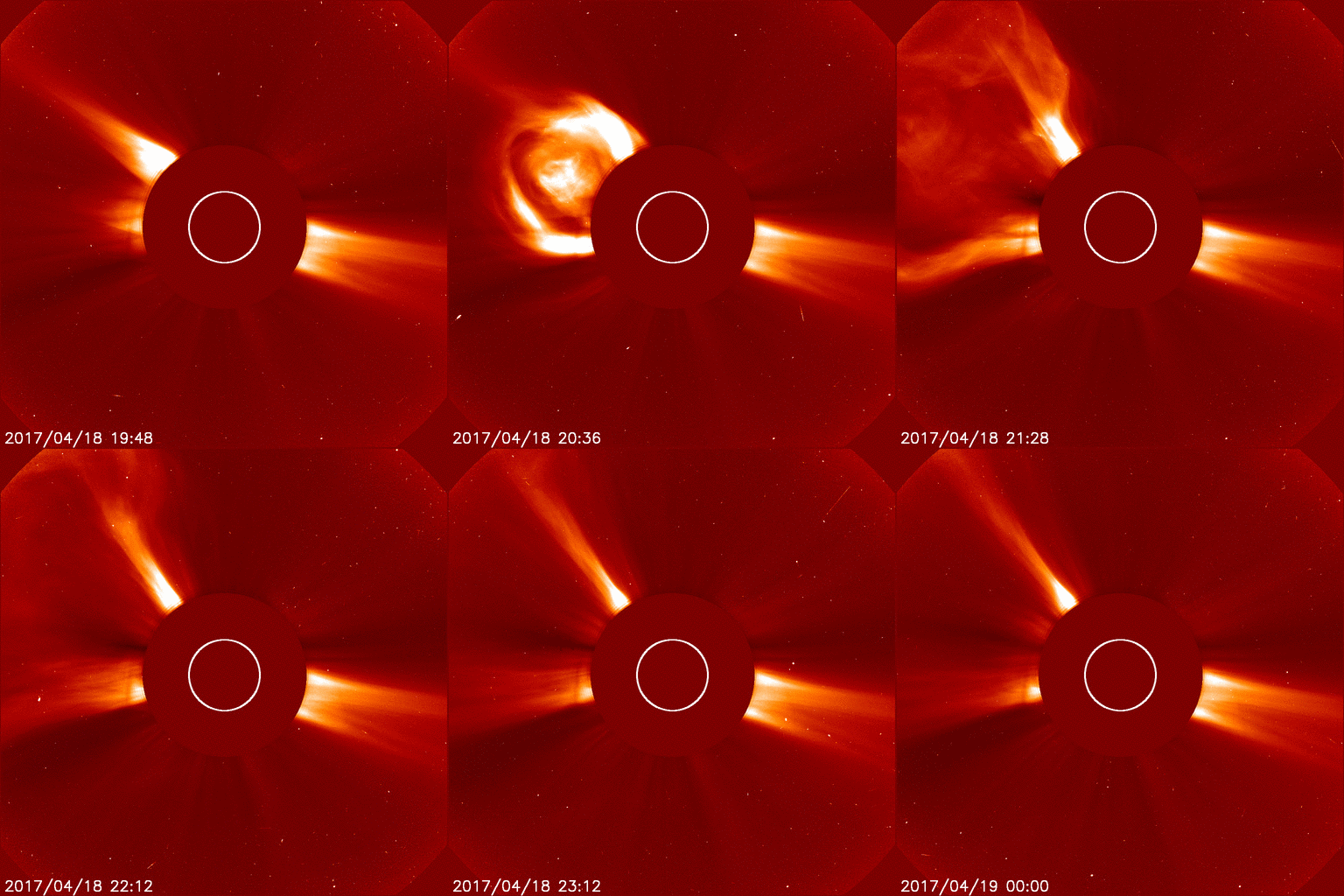
Today's Oracle report is an audio version that is a fascinating and powerfully insightful examination of aspects as relates to the major CME yesterday and what we see being played out on the world stage.  ~PB

My tags: Astrology, The Oracle Report, Astronomy, Spaceweather, CMEs, Solar Flares, Pluto, Capricorn, Moon Conjunct Pluto, Square, Eris/Aries, Background Messages, Unseen Assistance, Higher Spiritual Forces, Harmony, Rebirth, Liberty, Rebellion, Truth, True Justice, Cycles of Death + Rebirth, Divine Feminine/Masculine, Awakening, Combat, Soldiers, Warriors, Service to Humanity, Bravery, Peace, Blowback, Divide + Conquer, Music of the Spheres, Recalibration, Archontic Energetics Fall, Persevere Through Challenges, Shifts in Consciousness, Disequilibrium, Higher Level Guidance,


"TURTLE NATION" TAKEN BY WISE OWL LUCKY (reminds me of "Turtles all the way down" by STURGILL SIMPSON - LW)
"TURTLE NATION" TAKEN BY WISE OWL LUCKY
(reminds me of "Turtles all the way down" by STURGILL SIMPSON - LW)

THE ORACLE REPORT: Wednesday, April 19, 2017


Sabaoth the Sun released a CME yesterday.  Here's the astrological report on it.  Much love! - Laura


[NOTE: THIS IS AN AUDIO FILE, GO TO http://www.oraclereport.com
TO LISTEN OR DOWNLOAD IT]
 

Saturday, June 27, 2015

INCOMING! - ANOTHER CME IS ON THE WAY (People Have the Power!)

Don't know about you, but I am alternately energized and wiped out this week...despite sleeping more. Seems like the times I am suddenly exhausted coincide with the timing of the energies hitting the planet.  (I later find out).  Big shifts are occurring in my life, all positive, but meanwhile I am going with the flow and resting when needed, being active when I feel the need. ~PB


http://spaceweather.com/images2015/25jun15/cme_anim2.gif?PHPSESSID=n36sa300bdaca8kqkovnt2ist1


INCOMING! - ANOTHER CME IS ON THE WAY
: Since June 21st, four CMEs have hit Earth's magnetic field. A fifth is on the way. Sunspot AR2371 erupted again during the early hours of June 25th, producing an M7.9-class solar flare and a lopsided CME. The Solar and Heliospheric Observatory photograhed the storm cloud, which raced away from the sun faster than 2000 km/s (4.5 million mph):


http://spaceweather.com/images2015/25jun15/cme_anim2.gif?PHPSESSID=n36sa300bdaca8kqkovnt2ist1


The CME will hit Earth's magnetic field on June 27th, probably mid-day Universal Time. According to NOAA computer models there is a 79% chance of polar geomagnetic storms. High-latitude sky watchers should be alert for auroras. Aurora alerts: text or voice.


http://spaceweather.com/

Tuesday, June 23, 2015

INCOMING: SOLSTICE GEOMAGNETIC STORM + ANOTHER CME IS ON THE WAY | SPACEWEATHER.COM


SOLSTICE GEOMAGNETIC STORM:
A series of CMEs hit Earth's magnetic field on June 22nd, producing a severe G4-class geomagnetic storm. Northern Lights spilled across the Canadian border into more than a dozen US states, including places as far south as Colorado, Georgia, Virginia and Arkansas. "The auroras did not disappoint," says Chris Cook, who witnessed the display from Cape Cod, Massachusetts:


"They were visible in deep twilight!" he adds. "I positioned myself on a beach overlooking Cape Cod Bay so I could capture the reflection in the water at low tide."


More auroras are in the offing as Earth's magnetic field reverberates from the CME strikes. NOAA forecasters estimate a 90% chance of polar geomagnetic storms on June 23rd, subsiding only a little to 70% on June 24th. Aurora alerts: text, voice


Realtime Aurora Photo Gallery


MEANWHILE ... ANOTHER CME IS ON THE WAY: Big sunspot AR2371 erupted again on June 22nd (18:23 UT), producing a strong M6.5 class solar flare. NASA's Solar Dynamics Observatory recorded the extreme ultraviolet flash:


X-ray and UV radiation from the flare ionized the upper layers of Earth's atmosphere, causing a blackout of some shortwave radio signals over North America (blackout map). Mariners and ham radio operators, in particular, may have noticed disturbances at frequencies below ~20 MHz.


The explosion also hurled a full-halo CME directly toward Earth: movie. NOAA analysts are still modeling the storm cloud to estimate its likely time of arrival. Best guess: June 24th.


from:  http://spaceweather.com/

Monday, June 22, 2015

SEVERE GEOMAGNETIC STORM IN PROGRESS


SEVERE GEOMAGNETIC STORM IN PROGRESS: A severe G4-class geomagnetic storm is in progress on June 22nd. This follows a series of rapid-fire CME strikes to Earth's magnetic field during the past 24 hours. Magnetic fields in the wake of the latest CME are strongly coupled to Earth's own magnetic field. This is a condition that could sustain the geomagnetic storm for many hours to come. High- and mid-latitude sky watchers should be alert for auroras tonight, especially during the hours around local midnight. Aurora alerts: text, voice


EARTH-DIRECTED SOLAR FLARE, RADIO BLACKOUT: Sunspot AR2371 has erupted again, producing a strong M6.5 class solar flare. NASA's Solar Dynamics Observatory captured the flare's extreme ultraviolet flash on June 22nd at 18:23 UT:


X-ray and UV radiation from the flare ionized the upper layers of Earth's atmosphere, producing a moderately-strong blackout of shortwave and low-frequency radio signals over North America. The North American blackout is subsiding now. An even deeper radio blackout is still underway around both of Earth's poles. This is due to solar protons and electrons being funneled into the polar regions by Earth's magnetic field. A blackout map from NOAA shows the geographical distribution of the radio disturbances. Solar flare alerts: text, voice


http://spaceweather.com/


~~~


retweeted
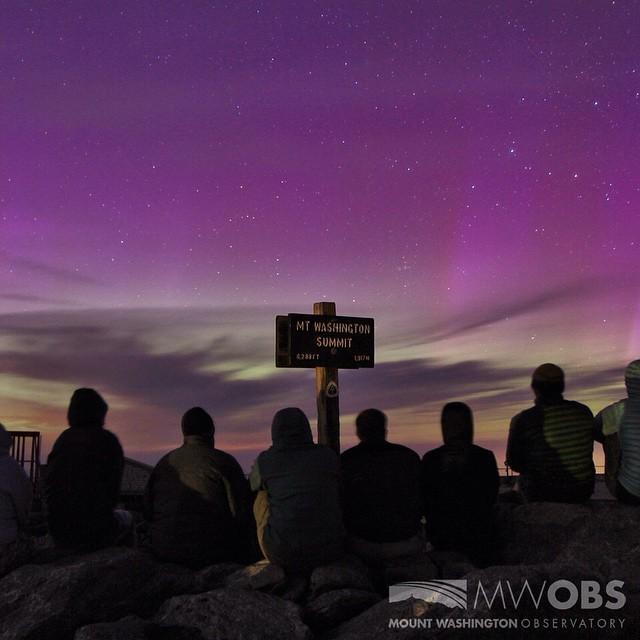
The crew takes in another view from the summit sign

Saturday, June 20, 2015

CELESTIAL TRIANGLE & HAPPY SOLSTICE from Spaceweather.com

CELESTIAL TRIANGLE & HAPPY SOLSTICE
From Spaceweather on June 20, 2015
http://spaceweather.com/


HAPPY SOLSTICE:
Tomorrow is the longest day of the year in the northern hemisphere, and the shortest day in the south--that is, the "June solstice." The exact moment of the solstice is Sunday, June 21st, at 12:38 pm EDT (16:38 UT). This marks the beginning of summer in the north and winter in the south. Happy solstice!

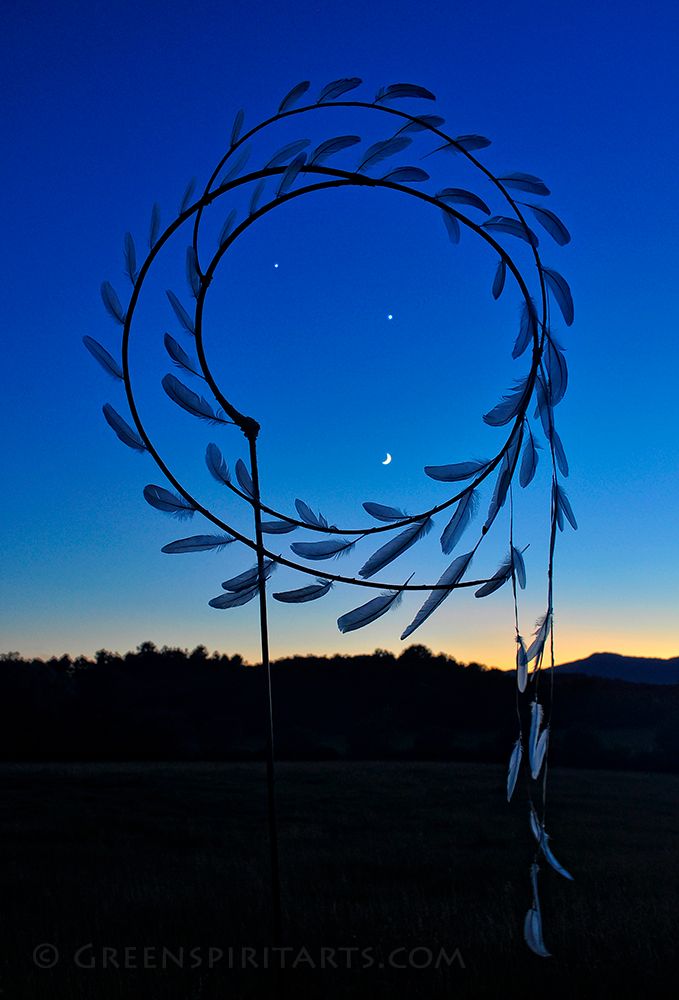
CELESTIAL TRIANGLE: When the sun sets tonight, go outside and face west. You will receive a beautiful lesson in geometry. Venus, Jupiter, and the crescent Moon have converged to form a scalene triangle in the sunset sky. In the Adirondack mountains of New York, artist Sally J. Smith created a special sculpture to frame the conjunction:


"The skies cleared here in time for me to set up this 'planet portal'  
I had made just for the occasion," says Smith, who creates  environmental sculptures 
 like this one at her outdoor studio in Wadhams, NY.

After this weekend, the Moon moves away from the planets--but the show won't be over. Venus and Jupiter will continue to converge, drawing ever closer to one another until June 30th. On that night, the two planets will be a jaw-dropping 1/3rd of a degree apart--less than the diameter of a full Moon.  You'll be able to hide the pair behind your little pinky finger outstretched at arm's length. Mark your calendar and enjoy the show!

Tuesday, March 17, 2015

CME IMPACT, SEVERE GEOMAGNETIC STORM + BRIGHT FIREBALL, POSSIBLE METEORITE FALL | SPACEWEATHER.COM

There sure are a lot of meteorites seen lately, all over the world.  Or at least that's what we're told they are.  -PB


CME IMPACT, SEVERE GEOMAGNETIC STORM + BRIGHT FIREBALL, POSSIBLE METEORITE FALL | SPACEWEATHER.COM


CME IMPACT, SEVERE GEOMAGNETIC STORM: Arriving earlier than expected, a CME hit Earth's magnetic field on March 17th at approximately 04:30 UT. At first, the impact sparked a relatively mild G1-class (Kp=5) geomagnetic storm. Since then, however, the storm has intensified to G4-class (Kp=8), ranking it as the strongest geomagnetic storm of the current solar cycle. This storm is underway now. Before sunrise, bright auroras were sighted over several northern-tier US states including Minnesota, Wisconsin, Montana, the Dakotas and Washington. Marketa Murray sends this picture from Dalton Highway in Alaska:


"The auroras were insane," says Marketa who regularly runs a photography workshop on the Arctic Circle. She has seen a lot of auroras. "I have never seen anything like this."


This storm could continue for many hours to come as Earth passes through the turbulent wake of the CME. Stay tuned for updates. Geomagnetic storm alerts: text, voice


BRIGHT FIREBALL, POSSIBLE METEORITE FALL: On March 15th, a meteor exploded over southern Germany. The shadow-casting fireball was brighter than the full Moon and it produced loud sonic booms – a sign that it penetrated deep in the atmosphere and may have dropped meteorites on the ground. Attracted by the sounds, astrophotographer Hans Hopf of Bavaria, Germany, turned his camera to the sky just in time to capture a plume of debris twisting in the winds overhead:


"I could see the 'smoke' twisting and turning through the constellation Orion for more than 20 minutes after the meteor exploded," says Hopf. "The field of view of these images is about 10 degrees. The bright star is Betelgeuse (Alpha Orionis)."

The International Meteor Organization is gathering eyewitness reports through their new online reporting tool. European readers, if you witnessed this event, please report it. Your sighting could help pinpoint the landing zone of possible meteorites.

Sunday, March 15, 2015

March 15th began with a bang..... | Spaceweather.com

March 15th began with a bang..... | Spaceweather.com


SLIGHT CHANCE OF SUNDAY STORMS:
The X-flare of March 11th might not be done affecting our planet. According to computer models, a CME propelled into space by the explosion will sideswipe Earth's magnetic field on Sunday, March 15th. NOAA forecasters estimate a 30% chance of G1-class geomagnetic storms if and when the CME arrives. Aurora alerts: text, voice


SOLAR FLARE AND CME: March 15th began with a bang. Between 00:45 UT and 02:00 UT, a magnetic filament erupted in concert with a slow C9-class solar flare from sunspot AR2297. This movie of the eruption comes from an extreme UV telescope onboard NASA's Solar Dynamics Observatory:


The combo blast hurled a CME into space: SOHO movie. Modeling by NOAA analysts suggests that the cloud will deliver a glancing blow to Earth's magnetic field during the late hours of March 17th. Will there be green skies on St. Patrick's Day? NOAA forecasters estimate a 50% chance of geomagnetic storms when the CME arrives.Solar flare alerts: text, voice


Realtime Space Weather Photo Gallery
http://spaceweathergallery.com/


AURORA OUTBURST: Last night, March 14-15, sky watchers around the Arctic Circle witnessed a magnificent outburst of auroras. "It was utterly amazing," reports Oliver Wright of Abisko, Sweden. "Best I've seen in years of night photography." He took this picture just as the storm was getting started:


"Later, the auroras exploded and just filled the sky!" he said.


Chad Blakley, an aurora tour guide in Abisko National Park, says "I have seen some very impressive displays during all of the years that I have been living in Abisko, but this particular show was truly one of a kind." Using a high speed camera, he captured a must-see movie which Blakley says "closely represents what we saw with our own eyes."


Aurora outbursts are often caused by CMEs. In this case however, a CME was not responsible. Instead, the interplanetary magnetic field (IMF) around Earth tipped south. This opened a crack in Earth's magnetic field. Solar wind poured in to fuel the display. Aurora alerts: text, voice


Realtime Aurora Photo Gallery
http://spaceweathergallery.com/aurora_gallery.html


SOLAR RADIO BURST: For much of the past week, space weather news has focused on how sunspot AR2297 is causing radio blackouts on Earth. On March 12th the sunspot did the opposite. It unleashed a shortwave radio burst. "It was super intense--one of the strongest bursts of the current solar cycle," reports amateur radio astronomer Thomas Ashcraft. Click on the image below to play a recording of the sounds he heard issuing from the loudspeaker of his radio telescope in rural New Mexico:


"The recording starts a little rough for a few seconds in that there was a ham transmission in progress on one channel (22 MHz) and the other channel (23 MHz) had a tiny bit of buzz," says Ashcraft. "But then the solar burst hit and the ham voices were entirely drowned out. For the next 3 minutes, the airwaves were dominated by solar static."


These radio sounds are caused by beams of electrons--in this case, accelerated by an M4-flare. As the electrons slice through the sun's atmosphere, they generate a ripple of plasma waves and radio emissions detectable on Earth 93 million miles away. Astronomers classify solar radio bursts into five types; Ashcraft's recording captured a mixture of Type III and Type V.


More bursts are in the offing. AR2297 has an unstable 'beta-gamma-delta' magnetic field that harbors energy for 'radio-active' explosions. NOAA forecasters estimate a 70% chance of M-class flares and a 20% chance of X-flares on March 15th. Solar flare alerts: text, voice


http://www.spaceweather.com/

Wednesday, October 29, 2014

EarthSky // Science Wire, Space Release Date: Oct 27, 2014 8 A week of solar flares at one giant sunspot The biggest sunspot on the face of the sun in more than two decades erupted on October 26 with its sixth substantial flare in a week. The bright light in the lower right of the sun shows an X-class solar flare on Oct. 26, 2014, as captured by NASA's SDO. This was the third X-class flare in 48 hours, which erupted from the largest active region seen on the sun in 24 years. Image credit: NASA/SDO The bright light in the lower right of the sun shows an X-class solar flare on Oct. 26, 2014, as captured by NASA’s SDO. This was the third X-class flare in 48 hours, which erupted from the largest active region seen on the sun in 24 years. Image credit: NASA/SDO A giant active region on the sun erupted yesterday (October 26), with its sixth substantial flare since October 19. This flare was classified as an X2-class flare and it peaked at 6:56 a.m. EDT. This is the third X-class flare in 48 hours, erupting from the largest active region seen on the sun in 24 years. This huge sunspot – called AR 12192 – is around 129,000 kilometers across. That’s big enough for 10 Earths to sit side-by-side along its diameter. X-class denotes the most intense flares, while the number provides more information about its strength. An X2 is twice as intense as an X1, an X3 is three times as intense, etc. An X-class flare erupted from the sun on Oct. 25, 2014, as seen as a bright flash of light in this image from NASA's SDO. The image shows extreme ultraviolet light in the 131-angstrom wavelength, which highlights the intensely hot material in a flare and which is typically colorized in teal. Image credit: NASA/SDO An X-class flare erupted from the sun on Oct. 25, 2014, as seen as a bright flash of light in this image from NASA’s SDO. The image shows extreme ultraviolet light in the 131-angstrom wavelength, which highlights the intensely hot material in a flare and which is typically colorized in teal. Image credit: NASA/SDO Solar flares are powerful bursts of radiation. Harmful radiation from a flare cannot pass through Earth’s atmosphere to physically affect humans on the ground, however – when intense enough – they can disturb the atmosphere in the layer where GPS and communications signals travel. To see how this event may affect Earth, visit NOAA’s Space Weather Prediction Center, the U.S. government’s official source for space weather forecasts, alerts, watches and warnings. Liked NOAA NWS Space Weather Prediction Center Government Organization · 63,194 Likes · October 27 at 7:35am · Here is a week-long look at Region 2192's seemingly nonstop solar flare production in SDO/AIA 94 imagery. Enjoy! 65,198 Views 691471,207 Read more from NASA NASA's SDO Observes More Flares Erupting from Giant Sunspot October 28, 2014 SDO captured this image of the M6.6-class solar flare, peaking at 11:32 pm EDT on Oct. 28, 2014 A large active region erupts with a mid-level flare, an M6.6-class, in this image from NASA's SDO on the night of Oct. 27, 2014. The region will soon rotate over the right horizon of the sun and will no longer be facing Earth. Image Credit: NASA/SDO The sun emitted a mid-level solar flare, an M6.6-class, peaking at 11:32 pm EDT on Oct. 28, 2014 – the latest in a series of substantial flares from a giant active region on the sun that first erupted with a significant solar flare on Oct. 19. NASA's Solar Dynamics Observatory, which constantly observes the sun, captured images of the event. To see how this event may affect Earth, please visit NOAA's Space Weather Prediction Center at http://spaceweather.gov, the U.S. government's official source for space weather forecasts, alerts, watches and warnings. UPDATE: October 27, 2014, 5:00 p.m. EDT Sun releases another X2.0-class solar flare. NASA's Solar Dynamics Observatory captured this image of an X2.0-class solar flare bursting off the lower right side of the sun on Oct. 27, 2014. The image shows a blend of extreme ultraviolet light with wavelengths of 131 and 171 Angstroms. Image Credit: NASA/SDO A large active region on the sun erupted with another X-class flare, an X2.0, on Oct. 27, 2014 -- its fourth since Oct. 24. The flare peaked at 10:47 a.m. EDT. X-class denotes the most intense flares, while the number provides more information about its strength. An X2 is twice as intense as an X1, an X3 is three times as intense, etc. To see how this event may affect Earth, please visit NOAA's Space Weather Prediction Center at http://spaceweather.gov, the U.S. government's official source for space weather forecasts, alerts, watches and warnings. NASA's SDO Observes More Flares Erupting from Giant Sunspot - October 27, 2014, 11:00 a.m. EDT two blue images of sun with bright flare lower right NASA's SDO captured images of two M-class flares erupting from the same region on the sun. The flare on the left peaked at 8:34 pm EDT on Oct. 26, 2014; the flare on the right peaked at 6:09 am EDT on Oct. 27, 2014. The images show EUV light of 131 Angstroms, which is typically colorized in teal. Image Credit: NASA/SDO Continuing a week's worth of substantial flares beginning on Oct.19, 2014, the sun emitted two mid-level solar flares on Oct. 26 and Oct. 27. The first peaked at 8:34 pm EDT on Oct. 26, 2014, and the second peaked almost 10 hours later at 6:09 am EDT on Oct. 27. NASA's Solar Dynamics Observatory, which constantly observes the sun, captured images of both flares. Solar flares are powerful bursts of radiation. Harmful radiation from a flare cannot pass through Earth's atmosphere to physically affect humans on the ground, however -- when intense enough -- they can disturb the atmosphere in the layer where GPS and communications signals travel. To see how this event may affect Earth, please visit NOAA's Space Weather Prediction Center at http://spaceweather.gov, the U.S. government's official source for space weather forecasts, alerts, watches and warnings. The first flare was classified as an M7.1-class flare. The second flare was a bit weaker, classified as an M6.7-class. M-class flares are one tenth as strong as X-class flares, which are the most intense flares. The number provides more information about its strength. An M2 is twice as intense as an M1, an M3 is three times as intense, etc. The series of flares over the course of the previous week all erupted from a particularly large active region on the sun, labeled AR 12192 – the largest seen on the sun in 24 years. Active regions are areas of intense and complex magnetic fields that are often the source of solar flares. Active regions are more common at the moment as we are in what's called solar maximum, which is the peak of the sun's activity, occurring approximately every 11 years. What is a solar flare? For answers to this and other space weather questions, please visit the Spaceweather Frequently Asked Questions page. Related Links   › Download high resolution media from all flares from AR2192   › What does it take to be X-class?   › View Past Solar Activity Karen C. Fox NASA's Goddard Space Flight Center, Greenbelt, Md.A week of solar flares at one giant sunspot | Earth Sky

EarthSky // Science Wire, Space Release Date: Oct 27, 2014

    A week of solar flares at one giant sunspot

    The biggest sunspot on the face of the sun in more than two decades erupted on October 26 with its sixth substantial flare in a week.
    The bright light in the lower right of the sun shows an X-class solar flare on Oct. 26, 2014, as captured by NASA's SDO. This was the third X-class flare in 48 hours, which erupted from the largest active region seen on the sun in 24 years. Image credit: NASA/SDO
    The bright light in the lower right of the sun shows an X-class solar flare on Oct. 26, 2014, as captured by NASA’s SDO. This was the third X-class flare in 48 hours, which erupted from the largest active region seen on the sun in 24 years. Image credit: NASA/SDO

    A giant active region on the sun erupted yesterday (October 26), with its sixth substantial flare since October 19. This flare was classified as an X2-class flare and it peaked at 6:56 a.m. EDT. This is the third X-class flare in 48 hours, erupting from the largest active region seen on the sun in 24 years.
    This huge sunspot – called AR 12192 – is around 129,000 kilometers across. That’s big enough for 10 Earths to sit side-by-side along its diameter.


    X-class denotes the most intense flares, while the number provides more information about its strength. An X2 is twice as intense as an X1, an X3 is three times as intense, etc.

    An X-class flare erupted from the sun on Oct. 25, 2014, as seen as a bright flash of light in this image from NASA's SDO. The image shows extreme ultraviolet light in the 131-angstrom wavelength, which highlights the intensely hot material in a flare and which is typically colorized in teal. Image credit: NASA/SDO
    An X-class flare erupted from the sun on Oct. 25, 2014, as seen as a bright flash of light in this image from NASA’s SDO. The image shows extreme ultraviolet light in the 131-angstrom wavelength, which highlights the intensely hot material in a flare and which is typically colorized in teal. Image credit: NASA/SDO

    Solar flares are powerful bursts of radiation. Harmful radiation from a flare cannot pass through Earth’s atmosphere to physically affect humans on the ground, however – when intense enough – they can disturb the atmosphere in the layer where GPS and communications signals travel.
    To see how this event may affect Earth, visit NOAA’s Space Weather Prediction Center, the U.S. government’s official source for space weather forecasts, alerts, watches and warnings.


    NOAA NWS Space Weather Prediction Center
    Government Organization · 63,194 Likes
    · October 27 at 7:35am ·
    Here is a week-long look at Region 2192's seemingly nonstop solar flare production in SDO/AIA 94 imagery. Enjoy!
    65,198 Views

    Read more from NASA
    NASA's SDO Observes More Flares Erupting from Giant Sunspot
    October 28, 2014
    SDO captured this image of the M6.6-class solar flare, peaking at 11:32 pm EDT on Oct. 28, 2014
    A large active region erupts with a mid-level flare, an M6.6-class, in this image from NASA's SDO on the night of Oct. 27, 2014. The region will soon rotate over the right horizon of the sun and will no longer be facing Earth.  Image Credit: NASA/SDO

    The sun emitted a mid-level solar flare, an M6.6-class, peaking at 11:32 pm EDT on Oct. 28, 2014 – the latest in a series of substantial flares from a giant active region on the sun that first erupted with a significant solar flare on Oct. 19. NASA's Solar Dynamics Observatory, which constantly observes the sun, captured images of the event.


    To see how this event may affect Earth, please visit NOAA's Space Weather Prediction Center at http://spaceweather.gov, the U.S. government's official source for space weather forecasts, alerts, watches and warnings.


    UPDATE: October 27, 2014, 5:00 p.m. EDT
    Sun releases another X2.0-class solar flare.
    NASA's Solar Dynamics Observatory captured this image of an X2.0-class solar flare bursting off the lower right side of the sun on Oct. 27, 2014. The image shows a blend of extreme ultraviolet light with wavelengths of 131 and 171 Angstroms.  Image Credit: NASA/SDO

    A large active region on the sun erupted with another X-class flare, an X2.0, on Oct. 27, 2014 -- its fourth since Oct. 24. The flare peaked at 10:47 a.m. EDT.


    X-class denotes the most intense flares, while the number provides more information about its strength. An X2 is twice as intense as an X1, an X3 is three times as intense, etc.


    To see how this event may affect Earth, please visit NOAA's Space Weather Prediction Center at http://spaceweather.gov, the U.S. government's official source for space weather forecasts, alerts, watches and warnings.


    NASA's SDO Observes More Flares Erupting from Giant Sunspot - October 27, 2014, 11:00 a.m. EDT
    two blue images of sun with bright flare lower right
    NASA's SDO captured images of two M-class flares erupting from the same region on the sun. The flare on the left peaked at 8:34 pm EDT on Oct. 26, 2014; the flare on the right peaked at 6:09 am EDT on Oct. 27, 2014. The images show EUV light of 131 Angstroms, which is typically colorized in teal. Image Credit:  NASA/SDO

    Continuing a week's worth of substantial flares beginning on Oct.19, 2014, the sun emitted two mid-level solar flares on Oct. 26 and Oct. 27. The first peaked at 8:34 pm EDT on Oct. 26, 2014, and the second peaked almost 10 hours later at 6:09 am EDT on Oct. 27. NASA's Solar Dynamics Observatory, which constantly observes the sun, captured images of both flares.


    Solar flares are powerful bursts of radiation. Harmful radiation from a flare cannot pass through Earth's atmosphere to physically affect humans on the ground, however -- when intense enough -- they can disturb the atmosphere in the layer where GPS and communications signals travel.


    To see how this event may affect Earth, please visit NOAA's Space Weather Prediction Center at http://spaceweather.gov, the U.S. government's official source for space weather forecasts, alerts, watches and warnings.


    The first flare was classified as an M7.1-class flare. The second flare was a bit weaker, classified as an M6.7-class.


    M-class flares are one tenth as strong as X-class flares, which are the most intense flares. The number provides more information about its strength. An M2 is twice as intense as an M1, an M3 is three times as intense, etc.


    The series of flares over the course of the previous week all erupted from a particularly large active region on the sun, labeled AR 12192 – the largest seen on the sun in 24 years. Active regions are areas of intense and complex magnetic fields that are often the source of solar flares.


    Active regions are more common at the moment as we are in what's called solar maximum, which is the peak of the sun's activity, occurring approximately every 11 years.


    What is a solar flare?
    For answers to this and other space weather questions, please visit the Spaceweather Frequently Asked Questions page.

    Related Links
    › Download high resolution media from all flares from AR2192
    › What does it take to be X-class?
    › View Past Solar Activity

    Karen C. Fox
    NASA's Goddard Space Flight Center, Greenbelt, Md.

    Tuesday, July 8, 2014

    M-CLASS SOLAR FLARE: spaceweather

    M-CLASS SOLAR FLARE: Forecasters expected a solar flare today, and indeed one has occurred. But it came from an unexpected source. Emerging sunspot AR2113 showed that it is capable of strong flares with an M6-class eruption at 1630 UT on July 8th. NASA's Solar Dynamics Observatory recorded the extreme ultraviolet flash:
    Ionizing radiation from the flare briefly disturbed the propagation of shortwave radio transmissions on the dayside of Earth, but conditions have since returned to normal. The impulsive flare might have produced a coronal mass ejection (CME); if so, the storm cloud is almost certainly not heading toward Earth. For now, this sunspot is too far off the sun-Earth line to produce geoeffective CMEs.

     http://spaceweather.com/