Showing posts with label Yoga. Show all posts

Friday, January 10, 2020

Science Confirms That the Vagus Nerve Is Key to Well-being by Markham Heid | The Nuance / MEDIUM

The mysterious nerve network that quiets pain and stress — and may defeat disease

Dec 19, 2019 · 5 min read

Illustration: Kieran Blakey


T
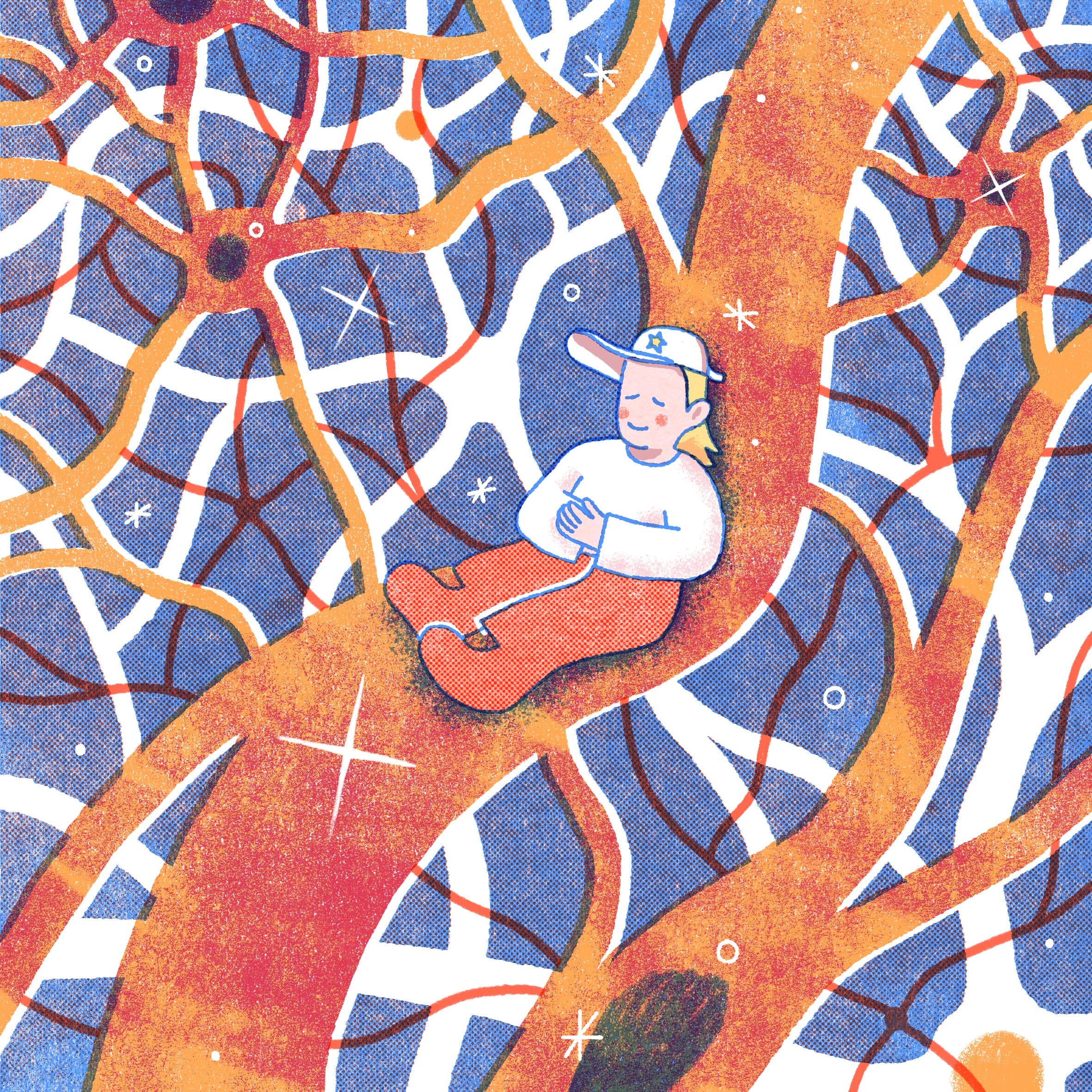
ake a deep breath. Hug a friend. Reach for the ceiling and stretch your limbs. Each of these simple acts bestows a sense of calm and comfort. And each works its soothing magic in part by activating a complicated system of nerves that connects the brain to the heart, the gut, the immune system, and many of the organs. That system is known collectively as the vagus nerve.

The vagus nerve is one of the twelve cranial nerves, which sprawl out from the brain and into the body like an intricate network of roots. These nerve networks act as lines of communication between the brain and the body’s many systems and organs. Some of the cranial nerves interpret sensory information collected by the skin, eyes, or tongue. Others control muscles or communicate with glands.

The vagus nerve, also called the “10th cranial nerve,” is the longest, largest, and most complex of the cranial nerves, and in some ways it’s also the least understood. Experts have linked its activity to symptom changes in people with migraine headaches, inflammatory bowel disease, depression, epilepsy, arthritis, and many other common ailments. The more science learns about the vagus nerve, the more it seems like a better understanding of its function could unlock new doors to treating all manner of human suffering.

Vagus is Latin for “wandering,” which is apt when one considers all the different parts of the body the vagus nerve reaches. “It seems like every year somebody finds a new organ or system that it talks with,” says Tiffany Field, PhD, director of the Touch Research Institute at the University of Miami School of Medicine.

“There’s a massive bioelectrical and biochemical series of events that the vagus nerve is responsible for, and all that is almost impossible to map.”

Field says that branches of the vagus nerve are connected to the face and voice. “We know that depressed people have low vagal activity, and this is associated with less intonation and less-active facial expressions,” she explains. A separate branch of the vagus nerve runs down to the gastrointestinal tract. Here, low vagal activity is associated with slowed gastric motility, which interferes with proper digestion, she says.

Still other branches of the vagus nerve are connected to the heart, the lungs, and the immune system. The vagus nerve’s activation or deactivation is tied to the ebb or flow of hormones such as cortisol and the digestive hormone ghrelin, the amount of inflammation the immune system produces, and many other internal processes that shape human health and experience. “There’s a massive bioelectrical and biochemical series of events that the vagus nerve is responsible for, and all that is almost impossible to map,” Field says.

How could one nerve system control so much? While some aspects of vagal activity are inscrutable, it’s clear that the nerve is the governor of the parasympathetic nervous system, which helps control the body’s relaxation responses. In simple terms, heightened vagal activity counteracts the stress response, which involves the sympathetic nervous system. “The sympathetic nervous system is fight or flight, while the parasympathetic nervous system is more chill out,” says Stephen Silberstein, MD, a professor of neurology and director of the Headache Center at Philadelphia’s Thomas Jefferson University Hospitals.

Silberstein co-wrote a comprehensive 2016 review of the research on the vagus nerve. He says that heightened vagal activity slows heart rate and also switches off inflammation, in part by triggering the release of immune system calming chemicals. There’s also evidence that activating the vagus nerve through electronic stimulation can produce a range of health benefits. “Depending on the frequency of the stimulation, we know it can turn off an asthma attack or an epileptic seizure,” Silberstein says. “It can turn off a migraine or cluster headache, and it can decrease the perception of acid reflux.”

Pick almost any common medical condition that’s made worse by stress or inflammation — everything from arthritis to inflammatory bowel disease — and there’s research showing that vagus nerve stimulation can help treat it or relieve its symptoms.

In the past, this stimulation required a surgical implant in the chest that transmits electrical pulses directly into the vagus nerve. But some newer, noninvasive devices — including one that has FDA approval for the treatment of migraine and cluster headaches — are capable of stimulating the vagus nerve when pressed against the skin of the neck. Silberstein says doctors are exploring the use of vagus nerve stimulation for a wide range of diseases and disorders, including afflictions of the mind.

“More and more, we’re learning how critical vagal activity is to attention and mood,” says Field. Already, there’s evidence that stimulating the vagus nerve may improve working memory or help people with attention deficit hyperactivity disorder. And since the early 2000s, the FDA has approved vagus nerve stimulation for the treatment of some forms of depression.

While electronic stimulation holds promise — and, in some cases, is already providing relief — for people with a range of ailments, Field says there are plenty of ways to stimulate vagal activity without a device or implant. “We know that massage and yoga promote parasympathetic nervous system activity, which is vagal activity,” she says.
Her research has shown that these and many related activities increase vagal activity via pressure receptors buried beneath the surface of the skin — receptors located throughout the body, and ones that only firm pressure or a deep stretch can reach. She points out that light touching or stroking is arousing, while a bear hug or powerful handshake are inherently soothing. “A strong hug or a handshake promote parasympathetic activity,” she says.

Silberstein says that almost anything people find relaxing — meditation, deep breathing — is also associated with heightened vagal activity and parasympathetic nervous system activity. “We did studies in the past showing that patients with migraine have impaired vagal activity,” he says. “We tried to fix that by doing yoga or deep-breathing meditation, and we found a lot of those things enabled us to activate the vagal nerve.” On the other hand, stress and anxiety are associated with depressed vagal activity, which may help to explain why these conditions are linked with an increased risk for other maladies.

There’s still a lot about the vagus nerve science doesn’t understand. But as doctors uncover more of its secrets, these discoveries are revealing new and more effective ways to relieve pain, inflammation, sadness, and disease.


https://elemental.medium.com/science-confirms-that-the-vagus-nerve-is-key-to-well-being-c23fab90e211

Elemental

Your life, sourced by science. A new Medium publication about health and wellness.

Markham Heid
Written by

Health and science writer. Father of two. Technoskeptic, though not a technocynic.

Wednesday, September 27, 2017

WIN-WIN SOLUTION

WIN-WIN SOLUTION: Let's all go to a Yoga class and meet halfway.
We'll do Warrior II pose, which is neither standing or kneeling.
Seriously, why not?


I did make it to a "Flow and Restore" Yoga class this evening. I have been in the house on the computer most of the time for many days sitting way too much, until today. I had signed up for 2 classes that I canceled on Friday night and Saturday morning. I was kind of having a Dark Night of the Soul for a few days, and didn't feel like being around people if I didn't have to. Almost went to one Sunday, but walked at the pond instead. Almost went last night but I couldn't get there in time. Now I feel much better from doing yoga and eating a healthy, spicy meal afterward. ( I went for Thai food, because that's what my body wanted to feel better. I love Thai iced tea to balance out the heat in the food.)


I actually want to do some more yoga before bed, which is the point of taking classes, to get back into a regular, daily practice. When you stop doing yoga for a long time, then start again, it is not so easy to get back to where you were. Your body protests, and as you breathe into that discomfort, you start to learn about your habits and your what your body wants and needs. To my surprise, I have come to understand it is the long hours at the computer that impacts me the most, not the bodywork on multiple massage clients. It's all about finding the balance. Balance, that is something I also need to work on more. Sounds like a plan. <3


(p.s.) Remember, Yoga is for EVERY body. Some clients have told me that they can't do yoga because "I've never been very flexible." --which is exactly why they need it! The beauty of it is that you are challenging yourself, it is not a competition. Who wouldn't want to feel better, sleep better, and cultivate better habits?


(p.p.s.) The other benefit of yoga is that is calms one down and helps one gain perspective, because the focus is not out there, it is inside one's heart.


~~~


My tags:
Yoga, Health + Wellness, Win-Win, Daily Practice, Listen to Your Body, Heart-Centered, Awakening, Consciousness, Every Body, Calm, Perspective, Breathe, Work/Life Balance, New Habits, Disengage from the Fray, Don't Take the Bait

Wednesday, September 20, 2017

Cats have much to teach us. They are natural yogis.


Cats have much to teach us. They are natural yogis. If we behave like cats we may feel more agile at a ripe age, and sleep better, too!


This Flow and Restore Yoga class tonight was very allowing. We could follow the suggested asanas, but also interpret our next move according to what our body needed. It was fine to modify, linger in a pose, or break from it altogether to do something different, or rest. At the end, we tuned in to our body to receive the messages from this experience.


Image may contain: people sitting, table and indoor


Although I bumped up against some of my limitations that didn't used to be there, I also pushed it a bit to try to free those injury areas that chronically feel "stuck". Breathwork was also helpful. Any time we feel anxious or stressed, we can choose to slow down and breathe to calm ourselves before carrying on.

I first started doing yoga over 40 years ago, in High School, with my Mom. It led me to learn to meditate and do yoga on my own, as I did for years, dropping and picking it up again, getting busy or sitting too much at the computer when I should be down on the mat.


Image may contain: cat


In the last few years, I have been inconsistent with yoga, only practicing at home sporadically. I have seldom danced or gone hiking since I left California, so my body gets less movement than I was accustomed to. In the bitter cold and high heat and humidity here, I am more sedentary than I was in California's dry warm hills and cool Redwood canyons. Even though I do massage, and a lot of it on some days, I also sit at the computer for long hours as I have been doing for several days now.
So the point of doing classes is to get back into a daily practice at home, and take classes here and there for guidance and motivation.


Image may contain: food and indoor


Images: Here is me as a cat, when I arrived at class, when I was able to relax and hold stretches, and after class, finding nourishment.


(MOL~!)

Thursday, May 7, 2015

Free Your Body from Trapped Emotions by Sonali Bansal


“One thing you can’t hide – is when you’re crippled inside.” ~ John Lennon


Pelvis is shaped like a bowl and the spine just like a straw that is dipped in the bowl connecting the brain to the entire network in the body. A complex unit of muscles, bones, tendons, fascia fibres and ligaments, pelvis houses integral muscles connecting the upper and lower extremities.


Our mind often tucks away emotions, stress, pain in the confines of the hip bowl. That is why our hips are referred as the junk drawer or the store room for dodged emotions.


Hips acquire a central role in our lives. The main muscle groups of the hip flexors, iliopsoas muscles, sartorius and Rectus Femoris, are responsible for the flight, fight and freeze response in the body.


Liz Koch in her article 'Psoas Health – Trauma recovery protocol' said “Our ancient (reptilian) brain recognizes danger by smell, look, feel and sound.” Since childhood, our sympathetic nervous system prepares your body for any form of dangerous, stressful situation or sudden shock by contracting the hip flexors and the muscles in the middle body. Parasympathetic nervous system, responsible for ‘rest and digest’ or ‘feed and breed’ syndrome neutralises the impact of the sympathetic nervous system and creates a sense of harmony in the body.


But due to highly strenuous atmosphere and surroundings, our body resets the benchmark of usual state of being, when it comes to stress and shock. Simply put, the body is chronically stressed and the hip flexors are on alert throughout. But by now, the body recognises tightness of hip flexors and suppressed emotions, to be a natural state of being. This leads to hampering the functions of the autonomic nervous system.


Psoas Muscle – Trauma to Recovery psoas muscles.


psoas muscles

Read more at: http://fractalenlightenment.com/34476/life/free-your-body-from-trapped-emotions | FractalEnlightenment.com
Psoas is an important muscle as it affects posture, helps stabilize the spine,
and, if it’s out of balance, can be a significant contributor to low back and pelvic pain.


A significant part of instinctual reflexes, psoas is the only flexor muscle connecting the spine to the legs and fasciae connecting to the diaphragmatic breathing system. A tight psoas muscle therefore, leads to shortness of breath or chest breathing, adding on to stress further. The cyclical motion of stress, which indirectly affects psoas and a tight psoas attributing to stress levels cannot be broken until an external stimulus is injected.


Liz Koch further adds that the fear of falling, getting into a dangerous situation is yet another instinctual reflex. As the body recognises such a situation, it slips into a safety zone. “..the psoas pulls the extremities together into a fetal pose, creating an enclosure, a sense of safety and protection for the soft, vulnerable parts of the body: Genitals, belly organs, lungs, heart and face. Curled, the spine gives the necessary resilience and strength against the imminent blow.”


The emotional traumas imbalance the deep core along with the psoas and creates restrictions in the root and sacral chakra. After a trauma, it is the ardent need of the body to come back in safety restoration mode. But just by telling someone that they are safe, the restoration does not fall back. The body has its own system to break free from the setback.


Sometimes this breakthrough comes through re-enactment of an incident in the mind and a feeling of overcoming it. We release the deeper levels of emotions gradually, as the feeling of safety starts to set in. But the frozen residual traumatic energy is still left in the psoas and hip area, as some of the strongest muscles are situated in this region.


So what should one do to release the psoas muscles? Just by massaging the psoas muscles or activating them, we might trigger the memories of the past. A conscious awareness, a resolved psoas (of the facilitator like the chiropractor or yoga teacher) and supportive positioning can lead to a gradual recovery.

Sacral Chakra – The store house

Yet another reason for the hips to be the safe house of traumatic emotions is because of the second chakra. Located under the belly button, this chakra engulfs the entire pelvic area. The centre of emotions and passions, a blocked Sacral Chakra is a ploy for trapped emotions. As per Yogic philosophy, the chakra store any and all forms of emotions and experiences. Our relationship with others as well as with ourselves is defined by this chakra.


An imbalance in the sacral chakra is often denoted by an inability to express our emotions and blocking them permanently. If there is an imbalance in the orange energy system, the sensory organs, genitals, hips, spleen, womb etc. would indicate excessive need for attention or low functioning.


Releasing the trauma in the hips


With alternate sciences gaining a warm acceptance, art forms like Yoga, Trauma Release Exercise (TRE), Fascia Unwinding, Hands on Healing, Meditation, Visualisation techniques, all are being taken up. Many war survivors, soldiers, people survived in car accidents are being subjected to such therapies. A report in Trauma Release Exercises (TRE) on Quality of Life by Taryn McCann states that, TRE is useful in improving the mental and physical health of the patients. “TRE represents one such potential method. It is a cost-effective, self-help technique that can be easily taught, either one-on-one, or to large groups of individuals. The exercises are simple and adaptable to suit individual fitness and physical capabilities.”


Constructive rest - Brooke Thomas
https://www.youtube.com/watch?v=wEcFi2IgXyI


Some of the TRE are Constructive Rest Position, rocking back and forth on Fetal Position, flexing and pointing the feet, shaking and rotating the legs, etc.

Often noticed, people in hip opener classes face sudden burst of emotions. In a detoxification camp or a yoga teacher training course, we find ourselves crying for no rhyme or reason. The reason is activating of a tight psoas muscles, or stimulated tissue/cell memories of the trauma.

Anjaneyasana or Crescent Moon Pose


Some of the yoga poses constructive for freedom from trapped emotions are: Child’s pose or Balasana, Half Pigeon Pose (Ek Pada Rajakapotasana), Butterfly pose, Low lunges or Anjaneyasana, Wide Angle Seated Pose or Upavistha Konasana etc. Varying in their levels, practice the poses easily and gradually move to advance ones.


child-pose

Read more at: http://fractalenlightenment.com/34476/life/free-your-body-from-trapped-emotions | FractalEnlightenment.com
s. child-pose

Read more at: http://fractalenlightenment.com/34476/life/free-your-body-from-trapped-emotions | FractalEnlightenment.com


Child pose or Balasana


Supple psoas muscles and free hips are not just about releasing emotions. Although this forms an integral part of the entire process, multiple other issues are resolved too. Like relief from lower back pain, unstable posture, support in sitting for longer hours in meditation, stronger core muscles, relaxed breathing, stress free life, healthy kidney, good sexual life etc.


Free Yoga Class Hip Openers and Fun Poses with Lesley Fightmaster
https://www.youtube.com/watch?v=115nVqy29eQ


The below link will help you understand the emotion code of the body, as per a book Emotion code by Dr. Bradley Nelson.


Dr. Bradley Nelson showing the Emotion Code Technique 20 May 2012
https://www.youtube.com/watch?v=1G5-0hwHeFA


~~~
Image Source Yoga /Anjaneyasana Child’s Pose Psoas muscle Trapped emotions Thank us with a share, not only does it help us grow, by sharing knowledge you help shift the planets consciousness. Thank you so much:

Read more at: http://fractalenlightenment.com/34476/life/free-your-body-from-trapped-emotions | FractalEnlightenment.com


Emotions, Healing, Health, Pain, Yoga
By Sonali Bansal

A healer, yoga teacher, traveler & philanthropist, she is an independent writer/blogger. A creative soul, her inner calling lies in spiritual oneness. Overcoming the hurdles of human birth, she is a karma yogini. Channeling the light wherever she goes, her focus is on self development as this is the real art of divine worship for her. Follow her page on: https://www.facebook.com/yogictransfusion


Free Your Body from Trapped Emotions Sonali Bansal Life 0 trapped emoitons in hips“One thing you can’t hide – is when you’re crippled inside.” ~ John Lennon Pelvis is shaped like a bowl and the spine just like a straw that is dipped in the bowl connecting the brain to the entire network in the body. A complex unit of muscles, bones, tendons, fascia fibres and ligaments, pelvis houses integral muscles connecting the upper and lower extremities. Our mind often tucks away emotions, stress, pain in the confines of the hip bowl. That is why our hips are referred as the junk drawer or the store room for dodged emotions. Hips acquire a central role in our lives. The main muscle groups of the hip flexors, iliopsoas muscles, sartorius and Rectus Femoris, are responsible for the flight, fight and freeze response in the body. Liz Koch in her article Psoas Health – Trauma recovery protocol said “Our ancient (reptilian) brain recognizes danger by smell, look, feel and sound.” Since childhood, our sympathetic nervous system prepares your body for any form of dangerous, stressful situation or sudden shock by contracting the hip flexors and the muscles in the middle body. Parasympathetic nervous system, responsible for ‘rest and digest’ or ‘feed and breed’ syndrome neutralises the impact of the sympathetic nervous system and creates a sense of harmony in the body. But due to highly strenuous atmosphere and surroundings, our body resets the benchmark of usual state of being, when it comes to stress and shock. Simply put, the body is chronically stressed and the hip flexors are on alert throughout. But by now, the body recognises tightness of hip flexors and suppressed emotions, to be a natural state of being. This leads to hampering the functions of the autonomic nervous system. Psoas Muscle – Trauma to Recovery psoas muscles Psoas is an important muscle as it affects posture, helps stabilize the spine, and, if it’s out of balance, can be a significant contributor to low back and pelvic pain. A significant part of instinctual reflexes, psoas is the only flexor muscle connecting the spine to the legs and fasciae connecting to the diaphragmatic breathing system. A tight psoas muscle therefore, leads to shortness of breath or chest breathing, adding on to stress further. The cyclical motion of stress, which indirectly affects psoas and a tight psoas attributing to stress levels cannot be broken until an external stimulus is injected. Liz Koch further adds that the fear of falling, getting into a dangerous situation is yet another instinctual reflex. As the body recognises such a situation, it slips into a safety zone. “..the psoas pulls the extremities together into a fetal pose, creating an enclosure, a sense of safety and protection for the soft, vulnerable parts of the body: Genitals, belly organs, lungs, heart and face. Curled, the spine gives the necessary resilience and strength against the imminent blow.” The emotional traumas imbalance the deep core along with the psoas and creates restrictions in the root and sacral chakra. After a trauma, it is the ardent need of the body to come back in safety restoration mode. But just by telling someone that they are safe, the restoration does not fall back. The body has its own system to break free from the setback. Sometimes this breakthrough comes through re-enactment of an incident in the mind and a feeling of overcoming it. We release the deeper levels of emotions gradually, as the feeling of safety starts to set in. But the frozen residual traumatic energy is still left in the psoas and hip area, as some of the strongest muscles are situated in this region. So what should one do to release the psoas muscles? Just by massaging the psoas muscles or activating them, we might trigger the memories of the past. A conscious awareness, a resolved psoas (of the facilitator like the chiropractor or yoga teacher) and supportive positioning can lead to a gradual recovery. Sacral Chakra – The store house Yet another reason for the hips to be the safe house of traumatic emotions is because of the second chakra. Located under the belly button, this chakra engulfs the entire pelvic area. The centre of emotions and passions, a blocked Sacral Chakra is a ploy for trapped emotions. As per Yogic philosophy, the chakra store any and all forms of emotions and experiences. Our relationship with others as well as with ourselves is defined by this chakra. An imbalance in the sacral chakra is often denoted by an inability to express our emotions and blocking them permanently. If there is an imbalance in the orange energy system, the sensory organs, genitals, hips, spleen, womb etc. would indicate excessive need for attention or low functioning. Releasing the trauma in the hips With alternate sciences gaining a warm acceptance, art forms like Yoga, Trauma Release Exercise (TRE), Fascia Unwinding, Hands on Healing, Meditation, Visualisation techniques, all are being taken up. Many war survivors, soldiers, people survived in car accidents are being subjected to such therapies. A report in Trauma Release Exercises (TRE) on Quality of Life by Taryn McCann states that, TRE is useful in improving the mental and physical health of the patients. “TRE represents one such potential method. It is a cost-effective, self-help technique that can be easily taught, either one-on-one, or to large groups of individuals. The exercises are simple and adaptable to suit individual fitness and physical capabilities.” Some of the TRE are Constructive Rest Position, rocking back and forth on Fetal Position, flexing and pointing the feet, shaking and rotating the legs, etc. Often noticed, people in hip opener classes face sudden burst of emotions. In a detoxification camp or a yoga teacher training course, we find ourselves crying for no rhyme or reason. The reason is activating of a tight psoas muscles, or stimulated tissue/cell memories of the trauma. anjaneyasana-by-the-sea Anjaneyasana or Crescent Moon Pose Some of the yoga poses constructive for freedom from trapped emotions are: Child’s pose or Balasana, Half Pigeon Pose (Ek Pada Rajakapotasana), Butterfly pose, Low lunges or Anjaneyasana, Wide Angle Seated Pose or Upavistha Konasana etc. Varying in their levels, practice the poses easily and gradually move to advance ones. child-pose Child pose or Balasana Supple psoas muscles and free hips are not just about releasing emotions. Although this forms an integral part of the entire process, multiple other issues are resolved too. Like relief from lower back pain, unstable posture, support in sitting for longer hours in meditation, stronger core muscles, relaxed breathing, stress free life, healthy kidney, good sexual life etc. The below link will help you understand the emotion code of the body, as per a book Emotion code by Dr. Bradley Nelson. Image Source Yoga /Anjaneyasana Child’s Pose Psoas muscle Trapped emotions Thank us with a share, not only does it help us grow, by sharing knowledge you help shift the planets consciousness. Thank you so much:

Read more at: http://fractalenlightenment.com/34476/life/free-your-body-from-trapped-emotions | FractalEnlightenment.com
Free Your Body from Trapped Emotions Sonali Bansal Life 0 trapped emoitons in hips“One thing you can’t hide – is when you’re crippled inside.” ~ John Lennon Pelvis is shaped like a bowl and the spine just like a straw that is dipped in the bowl connecting the brain to the entire network in the body. A complex unit of muscles, bones, tendons, fascia fibres and ligaments, pelvis houses integral muscles connecting the upper and lower extremities. Our mind often tucks away emotions, stress, pain in the confines of the hip bowl. That is why our hips are referred as the junk drawer or the store room for dodged emotions. Hips acquire a central role in our lives. The main muscle groups of the hip flexors, iliopsoas muscles, sartorius and Rectus Femoris, are responsible for the flight, fight and freeze response in the body. Liz Koch in her article Psoas Health – Trauma recovery protocol said “Our ancient (reptilian) brain recognizes danger by smell, look, feel and sound.” Since childhood, our sympathetic nervous system prepares your body for any form of dangerous, stressful situation or sudden shock by contracting the hip flexors and the muscles in the middle body. Parasympathetic nervous system, responsible for ‘rest and digest’ or ‘feed and breed’ syndrome neutralises the impact of the sympathetic nervous system and creates a sense of harmony in the body. But due to highly strenuous atmosphere and surroundings, our body resets the benchmark of usual state of being, when it comes to stress and shock. Simply put, the body is chronically stressed and the hip flexors are on alert throughout. But by now, the body recognises tightness of hip flexors and suppressed emotions, to be a natural state of being. This leads to hampering the functions of the autonomic nervous system. Psoas Muscle – Trauma to Recovery psoas muscles Psoas is an important muscle as it affects posture, helps stabilize the spine, and, if it’s out of balance, can be a significant contributor to low back and pelvic pain. A significant part of instinctual reflexes, psoas is the only flexor muscle connecting the spine to the legs and fasciae connecting to the diaphragmatic breathing system. A tight psoas muscle therefore, leads to shortness of breath or chest breathing, adding on to stress further. The cyclical motion of stress, which indirectly affects psoas and a tight psoas attributing to stress levels cannot be broken until an external stimulus is injected. Liz Koch further adds that the fear of falling, getting into a dangerous situation is yet another instinctual reflex. As the body recognises such a situation, it slips into a safety zone. “..the psoas pulls the extremities together into a fetal pose, creating an enclosure, a sense of safety and protection for the soft, vulnerable parts of the body: Genitals, belly organs, lungs, heart and face. Curled, the spine gives the necessary resilience and strength against the imminent blow.” The emotional traumas imbalance the deep core along with the psoas and creates restrictions in the root and sacral chakra. After a trauma, it is the ardent need of the body to come back in safety restoration mode. But just by telling someone that they are safe, the restoration does not fall back. The body has its own system to break free from the setback. Sometimes this breakthrough comes through re-enactment of an incident in the mind and a feeling of overcoming it. We release the deeper levels of emotions gradually, as the feeling of safety starts to set in. But the frozen residual traumatic energy is still left in the psoas and hip area, as some of the strongest muscles are situated in this region. So what should one do to release the psoas muscles? Just by massaging the psoas muscles or activating them, we might trigger the memories of the past. A conscious awareness, a resolved psoas (of the facilitator like the chiropractor or yoga teacher) and supportive positioning can lead to a gradual recovery. Sacral Chakra – The store house Yet another reason for the hips to be the safe house of traumatic emotions is because of the second chakra. Located under the belly button, this chakra engulfs the entire pelvic area. The centre of emotions and passions, a blocked Sacral Chakra is a ploy for trapped emotions. As per Yogic philosophy, the chakra store any and all forms of emotions and experiences. Our relationship with others as well as with ourselves is defined by this chakra. An imbalance in the sacral chakra is often denoted by an inability to express our emotions and blocking them permanently. If there is an imbalance in the orange energy system, the sensory organs, genitals, hips, spleen, womb etc. would indicate excessive need for attention or low functioning. Releasing the trauma in the hips With alternate sciences gaining a warm acceptance, art forms like Yoga, Trauma Release Exercise (TRE), Fascia Unwinding, Hands on Healing, Meditation, Visualisation techniques, all are being taken up. Many war survivors, soldiers, people survived in car accidents are being subjected to such therapies. A report in Trauma Release Exercises (TRE) on Quality of Life by Taryn McCann states that, TRE is useful in improving the mental and physical health of the patients. “TRE represents one such potential method. It is a cost-effective, self-help technique that can be easily taught, either one-on-one, or to large groups of individuals. The exercises are simple and adaptable to suit individual fitness and physical capabilities.” Some of the TRE are Constructive Rest Position, rocking back and forth on Fetal Position, flexing and pointing the feet, shaking and rotating the legs, etc. Often noticed, people in hip opener classes face sudden burst of emotions. In a detoxification camp or a yoga teacher training course, we find ourselves crying for no rhyme or reason. The reason is activating of a tight psoas muscles, or stimulated tissue/cell memories of the trauma. anjaneyasana-by-the-sea Anjaneyasana or Crescent Moon Pose Some of the yoga poses constructive for freedom from trapped emotions are: Child’s pose or Balasana, Half Pigeon Pose (Ek Pada Rajakapotasana), Butterfly pose, Low lunges or Anjaneyasana, Wide Angle Seated Pose or Upavistha Konasana etc. Varying in their levels, practice the poses easily and gradually move to advance ones. child-pose Child pose or Balasana Supple psoas muscles and free hips are not just about releasing emotions. Although this forms an integral part of the entire process, multiple other issues are resolved too. Like relief from lower back pain, unstable posture, support in sitting for longer hours in meditation, stronger core muscles, relaxed breathing, stress free life, healthy kidney, good sexual life etc. The below link will help you understand the emotion code of the body, as per a book Emotion code by Dr. Bradley Nelson. Image Source Yoga /Anjaneyasana Child’s Pose Psoas muscle Trapped emotions Thank us with a share, not only does it help us grow, by sharing knowledge you help shift the planets consciousness. Thank you so much:

Read more at: http://fractalenlightenment.com/34476/life/free-your-body-from-trapped-emotions | FractalEnlightenment.com

Friday, March 6, 2015

Yogadork: Stretching Is In Your Brain (Part 1): A New Paradigm of Flexibility and Yoga +(PART 2): What is the Value of Flexibility Without Strength? by Jenni Rawlings

Stretching Is In Your Brain (PART 1):
A New Paradigm of Flexibility and Yoga

image-1

by Jenni Rawlings


In yoga, we tend to place a lot of emphasis on stretching as a means toward more flexibility. But what actually happens in our body when we stretch? Most of us envision our bodies as consisting of play-doh like tissues that we pull on and make longer through stretching, but new science is revealing to us a model of stretching that is much more complex, dynamic, and fascinating than what has previously been imagined. And it turns out that thinking of our bodies in this older “play-doh” like version may be counterproductive and can lead to a number of injuries and structural problems resulting from our yoga practice. In order to keep our wonderful yoga tradition evolving and current, it’s important that we understand this new and fascinating science of stretching and any implications it might offer for our practice and teaching.


A NEW PARADIGM OF FLEXIBILITY


Biomechanics-based Restorative ExerciseTM teaches a lot of new and eye-opening information about stretching and flexibility that isn’t yet common knowledge in the yoga world. Additionally, the wonderful yoga teacher Jules Mitchell is on a mission to educate the yoga community about the science of stretching. Her recently-completed master’s thesis in exercise science is a comprehensive literature review of the most current scientific research on stretching to date, and it’s full of an abundance of important information for yogis.


Utilizing the innovative knowledge that these resources offer, let’s examine some of our current beliefs about stretching and introduce some helpful ways we can begin to update these beliefs to reflect the newest scientific word on the street.


image-2

WHAT WE THINK HAPPENS WHEN WE STRETCH


Most people think of their muscles as being either “long” or “short”, and that during a stretch, they are targeting their “short” muscles by physically “lengthening” or “loosening” them. In this stretching paradigm, our muscles are mold-able tissues like taffy or play-doh which we can form into a shape of our choosing by simply pulling or pushing on them. For example, when we fold forward into paschimottanasana (seated forward fold), we tend to imagine that our hamstrings are physically growing longer in that moment of our stretch in the same way that taffy would grow longer if we tugged on both of its ends for awhile. We imagine that when we release paschimottanasana, our hamstrings remain just a bit longer than they were before we did the stretch. And we also imagine that the longer and deeper we hold a pose like paschimottanasana, the longer and looser our hamstrings become.


This stretching paradigm is what most of us were taught in our yoga classes, workshops, and teacher trainings. It’s completely understandable that we might see the body as working like this, but new research is revealing a very different version of the biomechanics of stretching.


image-3


THE NEW SCIENCE OF WHAT HAPPENS WHEN WE STRETCH


We all know that when we stretch, we experience a feeling of “tightness” at our end range of motion – a sensation that limits us from moving any deeper into the stretch. We have traditionally defined this “tight” sensation as the result of having reached the end length of the muscle(s) we’re stretching. In other words, we pulled on the ends of our muscle until we reached its maximum physical length, and once we hit that boundary, the stretch stopped and we felt the “tightness”. With enough stretching, we could increase the length of our muscle and therefore move further into our stretch with time.


image-4


But we now understand that increasing our flexibility has much less to do with the physical length of our muscle tissue, and much more to do with the part of our body that controls and moves our muscles: the nervous system. Our brain, the main control center of our nervous system, is in constant communication with our muscles and one of its main imperatives is to keep our body where it perceives it is safe. Normal movements that we make throughout our day are considered safe by the brain because it knows and trusts them. But on the other hand, our brain is not familiar with ranges of motion that we never move into, so it’s much less likely to consider those places safe. When we stretch, if we move into a place that the brain isn’t familiar with, our nervous system will end our stretch by communicating with our muscles to put the breaks on the movement.


For example, if you happen to work on your computer for 8 solid hours a day (and if you don’t take frequent intermittent stretch breaks for your shoulders – hint hint :) ), the brain becomes very familiar with the arms-forward position that you use while typing and considers that range safe. Then later, if you decide to do a chest stretch in which you take your arm out to the side and then behind you, the brain doesn’t feel that that movement is safe because you so rarely go there, so it will limit your range very early on in the stretch.


A major takeaway from this new flexibility paradigm is that when we increase our range of motion through stretching, it isn’t because we pulled on our tissues and made them longer. It’s because we visited the edge of our stretch (also called stretch “tolerance”) enough times that our brain started to feel comfortable there and it began to allow us to move deeper into that range.


OKAY, I THINK I’M STARTING TO GET IT, BUT WHY IS THIS IMPORTANT?


It’s definitely interesting and more scientifically accurate to understand this previously-overlooked role that our nervous system plays in flexibility. But whether it’s your nervous system or the physical length of your muscles limiting you in a stretch, why does it matter? Isn’t a stretch a stretch, regardless of the mechanism behind it?


image-5


That’s a great question – I’m so glad you asked! The main answer has to do with what tissues are being targeted when we stretch. We often think and talk about stretching our muscles in our yoga poses (i.e. paschimottanasana stretches our “hamstrings”), but in truth our muscles are surrounded by, interwoven with, and inseparable from our fascia. Our fascia is our incredible body-wide web of connective tissue that is literally everywhere inside of us, and it includes our tendons and ligaments. Muscles and fascia are two distinct tissues with different properties, but both are affected when we stretch. And how we choose to stretch, which is based on whether we believe that we’re physically lengthening our muscles (old paradigm) or increasing our nervous system’s tolerance for the stretch (new paradigm), determines how our fascia will be affected during the movement. (Preview for Part 2 of this post: if we’re going with the older “pulling on our tissues like play-doh” paradigm, we’ll feel more drawn to stretching deeper and harder in our poses, which is much more likely to simply damage our tissues than give us the flexibility we seek.)


I’ll elaborate more on this and other important topics, like how we might choose to apply this new information to our yoga practice and teaching, in my next blog post. Stay tuned, guys! And in the meantime, if you’re interested in further reading, check out this awesome article by Jules Mitchell (written for a pretty science-oriented reader). See you for Part 2 soon!


——

Stretching Is In Your Brain (PART 2):
What is the Value of Flexibility Without Strength?

in YogaDork Ed
image-1


by Jenni Rawlings


In Part 1 of my “Stretching Is In Your Brain” series, we looked at some updated information on what happens physiologically inside of us when we stretch. To re-cap, new science is revealing that the widely-held belief that we physically grow our muscles longer during a stretch is inaccurate. Instead, flexibility is controlled by our nervous system, which determines how far it will allow us to move into a stretch based on how safe it perceives our body to be in that range of motion.


As yoga practitioners and teachers, we’ve been treating our muscles as though they are independent entities which we can mold through direct manipulation, but in reality our muscles are just the peripheral, subservient component of a much broader system of communication and control. Let’s explore some of the implications that this major paradigm shift has for how we approach the body in our yoga practice.


WHAT DOES PULLING HARD ON OUR TISSUES ACHIEVE?


In the old paradigm of stretching in which we believe that we’re physically pulling our tissues longer like taffy when we stretch, it would logically follow that in order to gain more flexibility, we should simply pull harder and deeper. Wringing oneself deep into a spinal twist or receiving a strong adjustment from a teacher intended to push your range of motion further are common examples of this strategy. But we now understand that flexibility is much less about using brute physical force to grow our muscles longer, and much more about using intelligent communication to suggest to our nervous system that a particular range of motion is safe.


In fact, the “brute force” method of stretching is problematic in multiple ways. When we stretch, our muscles aren’t the only tissues that are affected. Muscles are surrounded by and interpenetrated with fascia, which also makes up the body’s ligaments and tendons. When we move our body into a stretch, both our muscles and our fascia experience the stretch at the same time.


image-2

It’s important to understand that fascia has only a set range that it can stretch. Stretching offers many benefits to the health of our fascia, but it won’t change the range of this tissue. This means that after fascia experiences the load of a stretch, only one of two possibilities can happen: 1) it returns to its original length after being stretched or 2) it is stretched too far and is damaged. And that’s it! We don’t make our fascia “longer” when we stretch. And if we pull too hard on this tissue in an effort to elongate it, we will most likely move beyond its ability to withstand the load, which will ultimately lead to injury. As counterintuitive as it may seem, for the health and balance of our structure, we actually want our fascia to be quite “stiff” and “resilient”.
BUT HOW MUCH STRETCH IS THE RIGHT AMOUNT?


We understand that stretching intensely does not benefit us, but how do we know where that boundary lies in our body as well as our students’ bodies? Here’s a key rule to use in your practice: when we stretch, we should only move into a range of motion over which we have muscular control. This is because our nervous system feels safest when it senses that we have control over our movement.


Put another way, we don’t want to create flexibility without the strength to support it. If we stretch within these parameters, our practice is likely to contribute to a balanced body that moves well. However, when we stretch into a range in which the targeted muscles cannot function, we are creating excessive mobility (and more than likely hypermobility) that we don’t have the ability to stabilize.

image-3
Hanumanasana, yoga’s forward split.

To illustrate this point, let’s look at hanumanasana, yoga’s forward splits. If we practiced this pose with the goal of building flexibility within the context of strength, we would only move as deep into the shape as the muscles of our legs could maintain control. Picture it: without using your arms pressing into the floor, you would slowly lower down into your full hanumanasana and then use those very same leg muscles to lift yourself all the way back up (again, without the use of the arms!) This might seem like a superhuman acrobatic feat, but I promise it would be possible if you truly worked to build power at your end range.


image-4
My friend Maddy demonstrating gomukhasana arms.

Let’s touch in on a few other asanas to see how this “stability at your end range” principle might apply. Padmasana, or lotus pose, is one of yoga’s classic asanas. Most of us use our arms to pull our legs into this shape. We also sometimes use momentum to quickly fold our legs into lotus, but momentum is another method of moving into a range of motion that we don’t have the strength to control. Is it any wonder that padmasana is notorious for tearing soft tissue in many a yogi’s knee joint? Try this instead: without using your arms or momentum, use only the muscles of your legs to fold your feet as close to your hips as you can and breathe there. This shape – one over which your muscles have control – is the correct stability edge for your body. Another great example is eka pada sirsasana, yoga’s leg-behind-the-head pose. If that leg can climb behind your head itself, without the use of your arms, then you’re staying within your excellent strength-at-your-end-range limits. But I have yet to see a yogi who can accomplish such a daunting task! A less obvious pose in which we commonly move beyond our stability edge is gomukhasana, or cow-face arms. Many people like to use their opposite arm to help that bottom arm climb higher up the back, but as soon as we interfere with that bottom arm’s own ability to move itself to its edge, we are stretching past our active range of motion and into unsupported mobility.


IN CONCLUSION…


I know that so many of us yogis are used to going as deep as our bodies will allow in our poses. Think of the innumerable beautiful photos that yoga teachers have in their portfolios or on Instagram of their bodies looking extremely graceful in a perfectly- executed forward split. (I don’t personally have a photo of myself in hanumanasana, but I certainly have photos of many other asanas in which I’ve moved well beyond my active boundaries.)


The science behind utilizing stability as a container for flexibility is not yet widely understood in the yoga world – and not surprisingly, the number of overstretching injuries in our community is quite high. But as a yoga community, we have to ask ourselves some tough questions: if you have the mobility to move deeper into a pose than your muscles can control, where is that mobility coming from, what is it offering you in terms of how well your body functions, and how many more times can you practice this pose before an injury occurs? What is the value of flexibility without the strength to support it? This is the kind of shift in thinking that yoga needs to make if we want our practice to truly offer the structural health and other long-term benefits like aging with ease that so many yoga practitioners seek.


~
Jenni Rawlings loves to weave her natural interest in anatomy and biomechanics into her yoga teaching. She is grateful to so many teachers who inspire her, most notably amazing biomechanist Katy Bowman. You can find out more about Jenni at www.jennirawlings.com.

Monday, August 11, 2014

15 Tips For Empaths And Highly Sensitive People


15 Tips For Empaths And Highly Sensitive People

by Lynn Zambrano R.N.

Empathic ability allows you to read and understand people’s energy. This ability may be genetic, passing from generation to generation.

You may share this ability with a relative, so look at your family tree; does anyone else seem to fit the description? Empaths have the ability to scan another’s energy for thoughts, feelings and possibly for past, present, and future life occurrences. Most empaths are unaware of how this really works, and have accepted that they are sensitive to other people’s energy. The ability to correctly perceive and to some extent mirror the energy of another is a challenge. This gift allows us to steer ourselves through life with added perception. You need to be selective and have coping skills in place, if not you will easily be overwhelmed. These are some excellent methods for coping:

1. Schedule time with you: Spending time alone creates the space needed to release emotion, energy and stress.

2. Positive Affirmations: Short messages that train thought patterns. An example: “Let me receive what is in my best and highest good at this time”

3. Shielding: Placing a protective shield of white light that is around and encasing you in a bubble, remember to make a grounding cord so you don’t float away!

4. Chakra Cleansing and Balancing: Regular cleaning of the chakras will keep your energy field free of negative or unwanted energy. Re-balance them by bringing in energy that will create alignment and balance.

5. Centering: Align yourself with spirit and get out of Ego.  Try to live in the moment and whatever emotion comes up express and release it.

6. Stones: Some people find that crystals and gemstones aid in clearing negative energy and maintaining balance. Choose yours by trying several different stones,and by paying attention to how each feels.

7. Aroma therapy: Essential oils can enhance well being. Choose what elevates or calms your mood.

8. Forgiveness: Forgiving others and forgiving self is one of the most powerful tools you have. It will clear your energy and raise your vibrational rate.

9. Grounding: We have a grounding cord in the root chakra that connects us to the earth. Being aware of this and using this cord to both send negative energy into the earth where it is absorbed and drawing nourishing energy up from the center of the earth will increase your energetic flow.

10. Meditation:  Quiets the mind so you can center, be present and listen to the voice within.

11. Soothing Sounds: Relax yourself using music or nature sounds.

12. Animals and Nature: Being in Nature or spending time with our pets is a great way to relax, clear energy and connect.

13. Smudging:  The Native Americans have been doing this with great results for years. Burning sage while stating an intention is a great method for clearing energy.

14. Yoga:  Yoga is effective because it combines breathing, centering and grounding. A wonderful way to raise vibrational energy.

15. Gratitude and intention journal: Ending the day by writing a list of things you are grateful for and then stating an intention to work towards keeps the energetic flow steady.

Credits: Lynn Zambrano of www.omtimes.com
About the Author:
Lynn Zambrano R.N., has worked professionally as a nurse on a psychiatric crisis unit. While working as a nurse she studied energy healing and further developed her intuitive gifts. As an intuitive life guide she helps others achieve the success they want by breaking through perceived barriers, finding inner wisdom, clarity of mind, and inner strength. Twitter and Facebook, or email her at Lightminded1@yahoo.com. You can also visit Lynn at www.holisticmindcoach.com

Tuesday, June 24, 2014

"Never allow your mind to stray to far from your heart. The mind needs the heart so clarity and love are gifts that come from your spirit." -Shaman Durek

Yoga on the deck with coffee contemplation.


Yoga..my new way to start the day! — at Hyannis, Cape Cod
June 21 at 7:37 am · Like

Slightly easier today, but some things I haven't done in months have lost ground....
June 22 at 9:44pm · Like

However, after holding all those intense leg and hip-flexor stretches, I was finally able to do a guarded, careful, slow version of Child's Pose, for the first time in 2 years, without much protest from my injured knee!
June 22 at 9:47pm · Edited · Like

Wednesday, June 11, 2014

Hilarious Yoga Mat for Sale Ad on Craigslist By MindBodyGreen


Hilarious Yoga Mat for Sale Ad on Craigslist
By   MindBodyGreen

September 16, 2011 7:00 PM EDT

It looks like someone in Seattle is selling a yoga mat for $1. The mat was only used once and comes along with this hilarious usage timeline detailing the seller's experience in a hot yoga class. (Not such a good experience).

I doubt the room got up to 175 degrees, but nonetheless, funny.

I also doubt the seller used Heidi Kristoffer's super-easy method for yoga mat cleaning.

Any takers?

Here's the full text from the Seattle Craigslist ad below:

    Yoga mat for sale. Used once. - $1 (Bellevue)

    Yoga mat for sale. Used once at lunch hour class in December 2009. Usage timeline as follows:

    11:45a
    Register for hot yoga class. Infinite wisdom tells me to commit to 5 class package and purchase a yoga mat. I pay $89.74. Money well spent, I smugly confirm to myself.

    11:55a
    Open door to yoga room. A gush of hot dry air rushes through and past me. It smells of breath, sweat and hot. Take spot on floor in back of room next to cute blonde. We will date.

    11:57a
    I feel the need to be as near to naked as possible. This is a problem because of the hot blonde to my left and our pending courtship. She will not be pleased to learn that I need to lose 30 pounds before I propose to her.

    11:58a
    The shirt and sweats have to come off. I throw caution to the wind and decide to rely on my wit and conditioning to overcome any weight issues my fiancée may take issue with. This will take a lot of wit and conditioning.

    11:59a
    Begin small talk with my bride to be. She pretends to ignore me but I know how she can be. I allow her to concentrate and stare straight ahead and continue to pretend that I don't exist. As we finish sharing our special moment, I am suddenly aware of a sweat moustache that has formed below my nose. This must be from the all the whispering between us.

    12:00p
    Instructor enters the room and ascends her special podium at the front of the room. She is a slight, agitated Chinese woman. She introduces me to the class and everyone turns around to greet me just as I decide to aggressively adjust my penis and testes packed in my Under Armor. My bride is notably unfazed.

    12:02p
    Since I do have experience with Hot Yoga (4 sessions just 5 short years ago) I fully consider that I may be so outstanding and skilled that my instructor may call me out and ask me to guide the class. My wife will look on with a sparkle in her eye. We will make love after class.

    12:10p
    It is now up to 95 degrees in the room. We have been practicing deep breathing exercises for the last 8 minutes. This would not be a problem if we were all breathing actual, you know, oxygen. Instead, we are breathing each other's body odor, expelled carbon dioxide and other unmentionables. (Don't worry, I'll mention them later.)

    12:26p
    It is now 100 degrees and I take notice of the humidity, which is hovering at about 90%. I feel the familiar adorning stare of my bride and decide to look back at her. She appears to be nauseated. I then realize that I forgot to brush my teeth prior to attending this class. We bond.

    12:33p
    It is now 110 degrees and 95% humidity. I am now balancing on one leg with the other leg crossed over the other. My arms are intertwined and I am squatting. The last time I was in this position was 44 years ago in the womb, but I'm in this for the long haul. My wife looks slightly weathered dripping sweat and her eyeliner is streaming down her face. Well, "for better or worse" is what we committed to so we press on.

    12:40p
    The overweight Hispanic man two spots over has sweat running down his legs. At least I think its sweat. He is holding every position and has not had a sip of water since we walked in. He is making me look bad and I hate him.

    12:44p
    I consider that if anyone in this room farted that we would all certainly perish.

    12:52p
    It is now 140 degrees and 100% humidity. I am covered from head to toe in sweat. There is not a square millimeter on my body that is not slippery and sweaty. I am so slimy that I feel like a sea lion or a maybe sea eel. Not even a bear trap could hold me. The sweat is stinging my eyeballs and I can no longer see.

    12:55p
    This room stinks of asparagus, cloves, tuna and tacos. There is no food in the room. I realize that this is an amalgamation of the body odors of 30 people in a 140 degree room for the last 55 minutes. Seriously, enough with the asparagus, ok?

    1:01p
    140 degrees and 130% humidity. Look, bitch, I need my space here so don't get all pissy with me if I accidentally sprayed you with sweat as I flipped over. Seriously, is that where this relationship is going? Get over yourself. We need counseling and she needs to be medicated. Stat!

    1:09p
    150 degrees and cloudy. And hot. I can no longer move my limbs on my own. I have given up on attempting any of the commands this Chinese chick is yelling out at us. I will lay sedentary until the aid unit arrives. I will buy this building and then have it destroyed.
    I lose consciousness.

    1:15p
    I have a headache and my wife is being a selfish bitch. I can't really breathe. All I can think about is holding a cup worth of hot sand in my mouth. I cannot remember what an ice cube is and cannot remember what snow looks like. I consider that my only escape might be a crab walk across 15 bodies and then out of the room. I am paralyzed, and may never walk again so the whole crab walk thing is pretty much out.

    1:17p
    I cannot move at all and cannot reach my water. Is breathing voluntary or involuntary? If it's voluntary, I am screwed. I stopped participating in the class 20 minutes ago. Hey, lady! I paid for this frickin class, ok?! You work for me! Stop yelling at everyone and just tell us a story or something. It's like juice and cracker time, ok?

    1:20p
    It is now 165 degrees and moisture is dripping from the ceiling. The towel that I am laying on is no longer providing any wicking or drying properties. It is actually placing additional sweat on me as I touch it. My towel reeks. I cannot identify the smell but no way can it be from me. Did someone spray some stank on my towel or something?

    1:30p
    Torture session is over. I wish hateful things upon the instructor. She graciously allows us to stay and 'cool down' in the room. It is 175 degrees. Who cools down in 175 degrees? A Komodo Dragon? My wife has left the room. Probably to throw up.

    1:34p
    My opportunity to escape has arrived. I roll over to my stomach and press up to my knees. It is warmer as I rise up from ground level - probably by 15 degrees. So let's conservatively say it's 190. I muster my final energy and slowly rise. One foot in front of the other. One foot in front of the other. Towards the door. Towards the door.

    1:37p
    The temperature in the lobby is 72 degrees. Both nipples stiffen to diamond strength and my penis begins to retract into my abdomen from the 100 degree temp swing. I can once again breathe though so I am pleased. I spot my future ex wife in the lobby. We had such a good thing going but I know that no measure of counseling will be able to unravel the day's turmoil and mental scaring.

    1:47p
    Arrive at Emerald City Smoothie and proceed to order a 32 oz beverage. 402 calories, 0 fat and 14 grams of protein -- effectively negating any caloric burn or benefit from the last 90 minutes. I finish it in 3 minutes and spend the next 2 hours writing this memoir.

    3:47p
    Create Craigslist ad while burning final 2 grams of protein from Smoothie and before the "shakes" consume my body.

    4:29p
    Note to self - check car for missing wet yoga towel in am.


Any takers?! Some more funny wellness and yoga stories and videos here.

MindBodyGreen's Wellness Summit Streaming Live On Friday!

We're thrilled to present revitalize, a two-day summit with wellness experts from around the world. We're featuring talks by Dr. Mark Hyman, ultra-endurance athlete Rich Roll, Good Morning America co-anchor Dan Harris, actress and fashion icon Amber Valletta, and more. The best part? It's all FREE. Live streaming starts here at 12pm ET Friday, June 13.

 Go

Friday, May 16, 2014

The No. 1 Myth About Yoga (And How Learning The Truth Can Change Your Life) By Taylor Wells

The No. 1 Myth About Yoga (And How
Learning The Truth Can Change Your Life)

By Taylor Wells, the founder and owner of Prana Power Yoga™ (with five studios in Massachusetts and New York), author of Create the Best Life Ever and a United Nations Yoga Peace Ambassador.
http://www.huffingtonpost.com/2014/05/15/benefits-yoga-myth_n_5326137.html?utm_hp_ref=fb&src=sp&comm_ref=false

"Are you flexible? I don't mean, “Can you touch your toes?” Because honestly that's not important to me. When it comes to yoga, it doesn't matter if you're “flexible.” That's a myth. What matters is that you show up. And breathe. And do your best with breath. With a clear intention.

Allow me to explain. I believe that emotional, mental, and spiritual flexibility are virtuous and life-enhancing, and when it comes to yoga practice, paramount. My metaphor of choice: Compared to reeds in the field, trees look strong. But when the storms come, the trees can be uprooted, while the reeds move back and forth with the wind (read: change) and remain grounded. They're still standing when the storm (read: drama) passes.

When you cling to anything -- your thoughts, beliefs, positions, possessions -- and aren't willing to let your heart and mind bend back and forth a bit with the ideas and actions of others, you can easily be uprooted and slammed. One email can throw you off; gossip can flatten you.

Being like a reed doesn't mean being wishy-washy. It means moving a little with the winds of the time and change while remaining solidly anchored in the earth. In other words, flexible while deeply rooted.

So just how flexible are you? Would you identify yourself as intense or as someone who has a hard time laughing or enjoying things that challenge your opinions or routine? Might the people in your life describe you as rigid? Or are you open-minded and flexible, with an ability to be light and appreciate silliness?

When it comes to your own flexibility, what are you teaching your children, family, colleagues and friends -- or lack thereof?

Another way to assess your openness and/or emotional flexibility (besides asking and being honest with yourself) is to notice how you respond when someone brings up something new -- a different plan than you expected, an idea or a concept. Are you reactive or open? Do you cling to the "original plan" or are you open to another suggestion? Do you agree with what is proposed from a place of people-pleasing but feel emotionally resentful or angry? Does your body tense up, or do you feel stress and aggravation?

The next time something new is proposed, become curious, notice what goes down. Think of it as a journey, not a judgment of yourself. If what you notice on that journey is that you aren't as open and emotionally flexible as you thought or had hoped, that's great too, because now you have awareness and can take simple steps toward change. Because an open, loving heart and mind will translate into more joy in your life.

There are so many things you can do to cultivate openness and emotional flexibility. As the founder of Prana Power Yoga™, it's not surprising that I'd suggest getting on your mat. But you don't need to do it every morning at 4 a.m. for 90 minutes with incense burning. It can literally be two minutes on your mat (which you can place strategically next to your bed before you fall asleep at night) in rag doll (standing forward bend) while slowly breathing in and out and setting your intention for the day.

Here are some simple steps you can take toward cultivating openness and emotional flexibility:

1. Slow down. Breathe. Make eye contact with the person with whom you are speaking. This will allow you to be fully present, which is a precursor to being open.

2. Listen. Very few people actually listen. It's astonishing to me. If you are a good listener you will just naturally be more open and emotionally available. And you will have many friends!

3. Count to 10 in your head before responding. Maybe you don't need a full 10 seconds, but the point is to pause and take in what the person is telling you before reacting or thinking about your response.

4. Wake up 15 minutes earlier and sit quietly with your eyes closed. Set an intention for your day and visualize how you would like it to go. See yourself smiling and open. See others smiling back at you and interacting with you in a positive way.

5. Try something new every day, even if it's just eating something different for breakfast. Build a new pathway. Openness and emotional flexibility are muscles like anything else. So all it takes is practice, practice, practice.

6. Get on your yoga mat as often as possible. (It's worth repeating because it works.)

People often ask me, “Does a regular yoga practice lead to more spiritual and emotional flexibility or is spiritual flexibility required to start a yoga practice?"

All that is needed to start a yoga practice is showing up to your mat. That's it! The rest will take care of itself. Yoga will meet you where you are. Always.

Yoga doesn't require physical flexibility (the No. 1 myth about yoga and the reason more people don't show up to practice), but it will naturally come about over time. And even more fun and amazing, once you cultivate a consistent yoga practice, emotional and spiritual flexibility will also come easier. It won't require thought or planning or angst. You'll just start to notice -- and so will others! -- that you're becoming more flexible in these areas. And just like the reed, the "storms" will be much easier to navigate."